

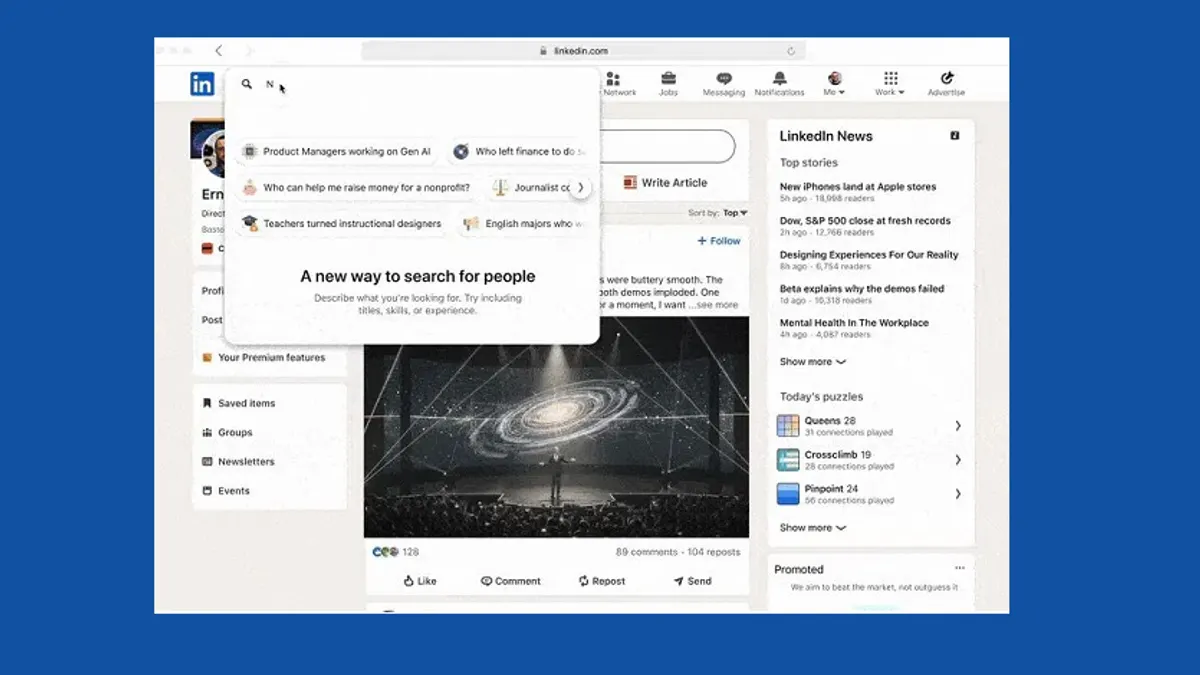
LinkedIn is further integrating artificial intelligence into its platform with the launch of an AI-powered conversational search feature. This new tool allows users to find relevant members, pages, and posts by asking specific questions in natural language, aiming to streamline the professional networking experience.
While the primary focus appears to be on finding individuals, the enhanced LinkedIn search bar can now process complex queries based on virtually any criteria entered by the user. Tomer Cohen, LinkedIn's Chief Product Officer, elaborated on the functionality:
Describe what you need in your own words, and we’ll surface the people who can help across your network. Type it like you’d say it, for example: ‘ex-coworkers who became founders in healthcare in NY,’ ‘angels with FDA experience for an early biotech,’ ‘Spanish-speaking school counselors in Austin focused on learning differences.’ From ‘who should I talk to?’ to ‘here’s who can help,’ it's how you can unlock opportunity on LinkedIn.
Cohen's examples highlight the specificity users can achieve, moving beyond traditional keyword searches to more nuanced, descriptive requests. This could significantly streamline the process of identifying specific professionals or resources, potentially bypassing the need for LinkedIn's traditional filter system.
The introduction of such a powerful AI search raises questions about the depth of its capabilities and potential privacy implications. Recalling the issues faced by Facebook's Graph Search, which allowed users to uncover sensitive information through specific queries, there's a natural curiosity about how LinkedIn's system will handle similar requests. While LinkedIn's professional context generally encourages users to present their best selves, limiting the likelihood of overtly embarrassing public data, the ability to cross-match profile information with posts could still lead to unexpected or undesirable discoveries.
Whether such granular insights are considered a "feature" or a "bug" remains to be seen. The utility of knowing more about one's network could be beneficial, but user satisfaction with how their information is surfaced will be a key factor in the feature's long-term success.
This isn't LinkedIn's first foray into advanced AI search. The platform introduced similar conversational language queries for job seekers in May, leveraging its extensive professional database to provide deeper insights. Given parent company Microsoft's significant investments in AI, the continued integration of AI across various aspects of the LinkedIn experience is a clear strategic direction.
However, the article cautions against using AI for generating comments or posts that misrepresent one's true skills or capabilities. While AI offers valuable functions, relying on it to create an inauthentic professional persona could lead to issues if real-world opportunities arise.
The updated AI search option is currently available to all LinkedIn Premium subscribers in the U.S. and is expected to roll out to all members in the near future.


