

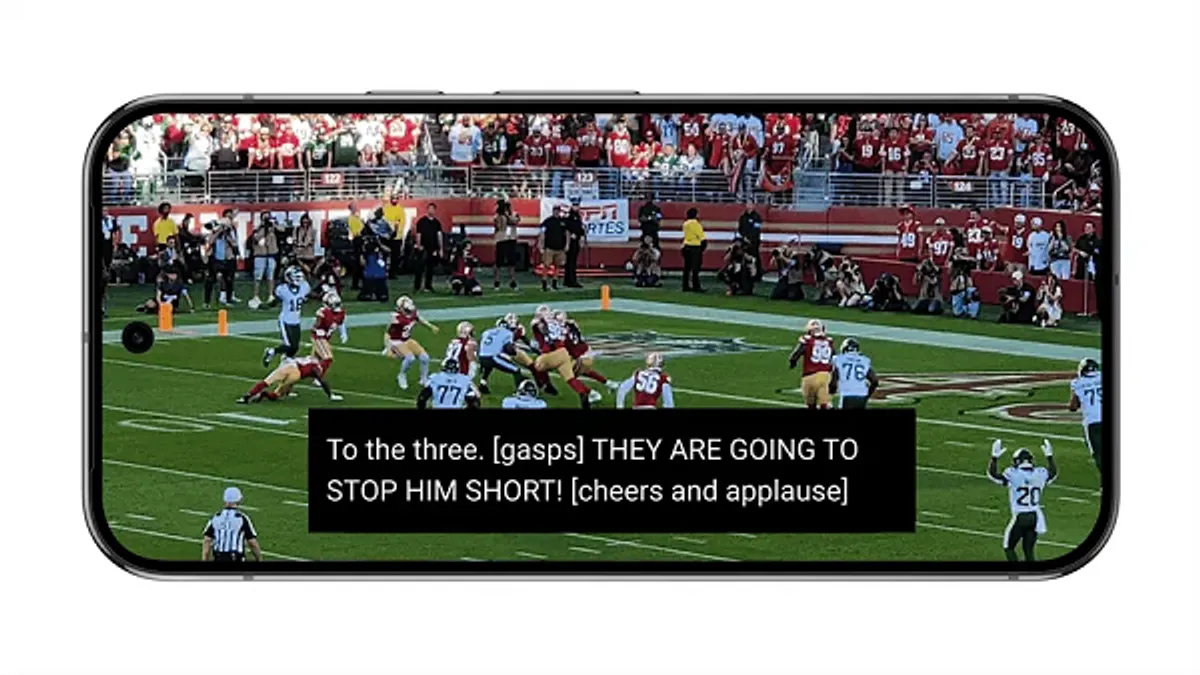
YouTube is significantly enhancing video accessibility by rolling out its AI-powered "Expressive Captions" feature to all devices. This update integrates contextual notes directly within captions, aiming to provide a more immersive and informative viewing experience that captures the full essence of on-screen content.
Expressive Captions go beyond simple transcription, incorporating additional details such as tone, volume, and environmental cues. As explained by Google, these new elements include:
- All CAPs: Captions will now use capitalization to reflect speech intensity, indicating when someone is excitedly exclaiming "HAPPY BIRTHDAY!"
- Vocal bursts: More non-speech sounds like sighing, grunting, and gasping will be identified, conveying essential emotional expressions.
- Ambient sound: Additional foreground and background noises, such as applause and cheers, will be labeled to offer a fuller picture of the surrounding environment.
Powered by Google's DeepMind system, Expressive Captions are designed to interpret broader contextual elements of a video, adding these markers to create a more inclusive and expressive viewing experience for all users.
Google highlights the comprehensive nature of this innovation:
"Using multiple AI models, Expressive Captions not only captures spoken words but also translates them into stylized captions, while providing labels for an even wider range of background sounds. This makes captions just as vibrant as listening to audio. It’s just one way we’re building for the real lived experiences of people with disabilities and using AI to build for everyone."
Initially launched on Android last December, Expressive Captions are now available for all English-language videos uploaded to YouTube after October of this year. This feature offers significant benefits, particularly for individuals with hearing impairments and those who watch videos in sound-off environments, providing a richer understanding of the content.


