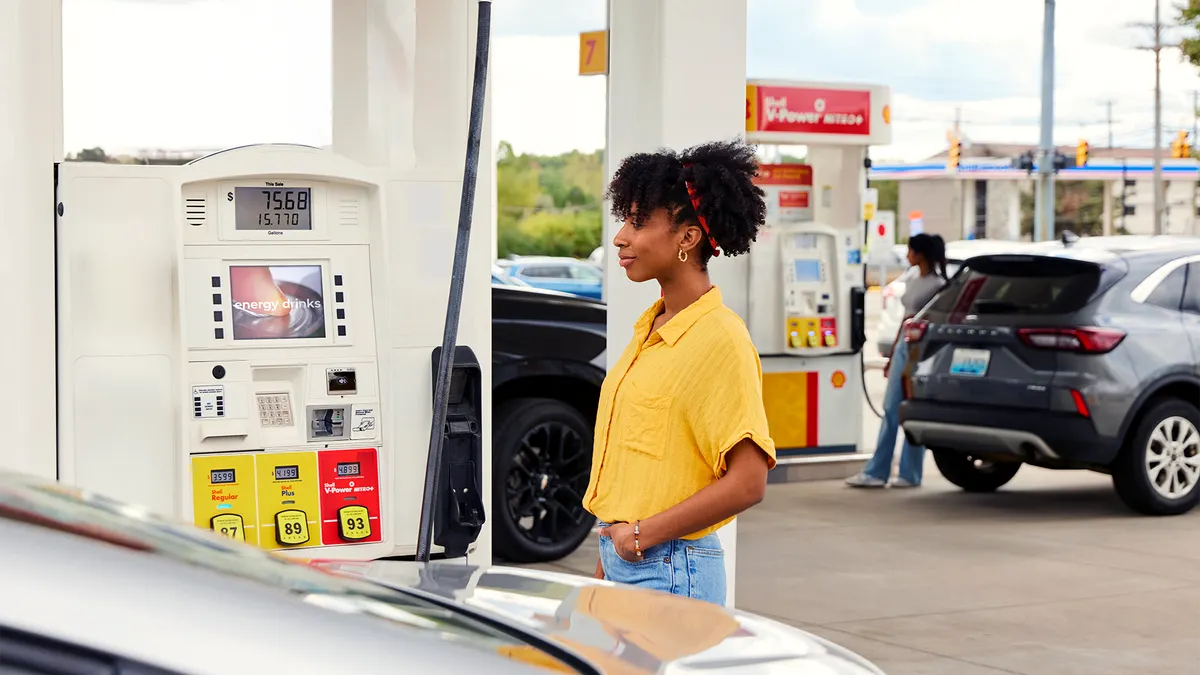
Every day, millions of Americans make quick stops at convenience stores – whether to refuel their cars, grab a coffee, a snack, or essential items on the go. These brief moments, often overlooked by marketers, represent a powerful opportunity for brand engagement. As consumers are in motion, frequently en route to their next destination, their attention is high, and purchase intent is often at its peak, just steps away from the point of sale.
With the rapid expansion of both convenience retail and sophisticated retail media networks, a compelling new channel has emerged that brands can no longer afford to ignore: convenience retail media. This dynamic space sits at the intersection of reach, relevance, and recency, transforming a simple pit stop into a high-performance marketing channel. Here’s why marketers should integrate convenience retail media into their strategic mix.
1. Convenience Stores are Community Hubs and Powerful Brand Partners
Modern convenience stores have evolved significantly beyond their traditional "gas and go" origins. Today, they serve as vital community hubs, particularly in smaller towns and suburban areas, often becoming local gathering places. For many Americans, the neighborhood c-store is not just a stop; it’s a staple.
Casey’s, the third-largest convenience retailer in the U.S., exemplifies this evolution in the retail media landscape. Through initiatives like Casey’s Access, the company empowers suppliers to connect with customers in more meaningful, data-driven ways.
“Through Casey’s Rewards, we can match around 50% of the transactions in our stores, giving us insights into shopping behavior that allow us to design impactful campaigns for our supplier partners,” explains Justin Coaldrake, Casey’s Senior Director of Omnichannel Guest Experience and Media. “And two-thirds of our stores are in towns with fewer than 20,000 residents, so Casey’s Access unlocks a new way for our suppliers to connect with our guests.”
By integrating loyalty data, digital channels, and in-store media, Casey’s is revolutionizing how CPG brands engage with convenience shoppers, offering retail media programs that rival the sophistication of larger national chains.
Coaldrake adds, “It is not uncommon to see in-store digital signage drive a double-digit sales increase or a full omnichannel campaign with an incremental return on ad spend (IROS) of 10x.”
This level of measurable impact underscores the immense value these community-based retail networks offer brands seeking to reach active, purchase-ready consumers.
2. Convenience Retail Media Delivers Scale with Audiences That Matter
While retail media networks across grocery, big-box, and e-commerce channels have garnered significant marketer attention, convenience retail media presents a distinct advantage: scale combined with unparalleled proximity. Networks like GSTV consolidate independent and regional convenience retailers onto a single, unified media platform, granting brands access to an otherwise fragmented audience.
With over 29,000 locations nationwide, GSTV provides the expansive reach of a national network alongside the contextual precision that comes from engaging consumers during real-world moments of intent.
“With 74% of viewers saying they often make unplanned snack or beverage purchases at the c-store, there’s clear evidence that well-timed, high-quality content drives impulse buys,” states Dan Trotzer, Executive Vice President of Industry at GSTV. “A nudge at the right moment—paired with compelling creative—can translate directly to an increase in sales.”
This influence is particularly potent among younger demographics. Trotzer highlights, “Half of our Gen Z viewers say they’ve purchased a new snack or drink after seeing a video ad at the pump. That’s not just awareness—that’s influenceable action. The best RMNs make it simple to buy against key demographics, like the Gen Z example, to help brands move from visibility to conversion at scale.”
Convenience media environments are uniquely positioned to reach these younger, mobile consumers—audiences who might not engage with traditional ads in their living rooms or frequent large-format retail stores weekly, but regularly stop for gas, grab a snack, and refuel before heading to their next destination.
3. Convenience Retail Media Drives Measurable Results for Brands
C-store environments are fertile ground for performance marketing. Shoppers here are often open to discovery and driven by impulse, making convenience retail media a natural fit for brands aiming to achieve immediate results.
Trotzer notes, “The suppliers who are already partnering with us on content at fuel screens see it as an attractive investment for the opportunity to reach a highly impulsive customer with content that highlights their most accretive SKUs.”
For CPG marketers, this means campaigns in the convenience space don’t just build awareness; they actively influence purchasing decisions. C-stores frequently serve as the initial point of trial for many single-serve or new-to-market products, offering brands an invaluable opportunity to test new SKUs, gauge demand, and measure sales lift in near real-time.
Furthermore, because ad exposure—whether at the forecourt or inside the store—is so closely tied to the moment of purchase, brands can effectively close the loop on performance. This allows for increasingly precise tracking of engagement, conversion, and incremental sales impact.
The Takeaway: Don’t Overlook Convenience Retail Media
The true strength of convenience retail media lies in its versatility. It seamlessly complements broader retail media efforts while introducing a crucial layer of immediacy and physical-world influence. Every fuel-up or quick stop represents a few precious minutes of consumer attention. In these moments, brands have a unique opportunity to connect with audiences who are engaged, receptive, and ready to buy—often just steps from the point of sale.
Convenience retail media is more than just an emerging channel; it’s a powerful engine for growth. With proven results, scalable reach, and a highly influenceable audience, it’s time for marketers to fully recognize and harness its potential within their overall retail media strategy.
As you plan your next retail media investment, ask yourself: Is your brand truly leveraging the immense value of convenience retail media?