The holiday season, often seen as the most wonderful time of the year, has become a complex challenge for marketers. This year, brands face the dual task of connecting with cash-strapped consumers and navigating an advertising landscape increasingly shaped by Generation Z. This influential cohort, while valuable, is also contributing to a seasonal spending decline, necessitating a strategic shift in how brands engage with them.
Economic Headwinds and Gen Z's Spending Shift
Broad uncertainty clouds the 2025 holiday outlook. According to Deloitte’s annual retail survey, 57% of consumers anticipate an economic weakening over the next six months—the most negative sentiment recorded since the consultancy began tracking economic outlook in 1997. This somber mood is reflected in spending forecasts, with consumers expected to reduce their spending by 10% compared to 2024. Gen Z is projected to cut back even more significantly, by 34%, making it crucial for brands to refine their targeting strategies for this demographic.
“Gen Z is feeling the economic pressures at an even higher rate. For retailers, we know that Gen Z is on the fence about a lot of things, so can you get some more marketing and these social media campaigns going to tempt them [and] talk about the value you’re offering.”
— Lupine Skelly, Retail Research Leader, Deloitte
As marketers strive to resonate with shoppers, many are moving away from flashy narratives. Instead, they are emphasizing themes of connection and timelessness to communicate value. Simultaneously, strategies centered on social media virality, influencer collaborations, and in-person experiences remain popular for reaching Gen Z, who are also showing increased comfort with retail media and artificial intelligence.
Finding Value in Emotion and Affordability
Despite a majority of consumers expecting higher prices this season, optimism persists. Deloitte’s survey indicates that shoppers plan to cut back on non-essential seasonal purchases, like new holiday attire, to protect cherished traditions. With 70% actively seeking value, marketers are replacing traditional "glitz and glam" with a more authentic approach.
“We expect consumers to be a little more budget-conscious, a little more discerning with what they’re spending, and you see that in the creative work. Brands are responding by emphasizing the value of connection, shared experiences, more attainable human moments, less fantastical, dream holidays.”
— Hannah Lewman, Strategy Director, Ogilvy
Ogilvy’s Hannah Lewman highlighted Gap’s “Give Your Gift” holiday campaign, which features a 90-second ad set to an emotional cover of Miley Cyrus’s “The Climb.” Developed by Gap’s internal creative team and Invisible Dynamics, the spot underscores hope, connection, and individuality. “It’s not some over the top fantasy – it’s just emotional and real,” Lewman noted.
Affordability is also a key focus. Brands like Walmart are promoting budget-friendly options for holiday entertaining, while JCPenney revives its “Really Big Deals” program, unveiling new offers weekly during Amazon Prime Video’s “Thursday Night Football.” JCPenney’s “It’s What They Thought That Counts” campaign cleverly plays on the satisfaction of finding high-quality gifts at lower prices.
Daryl Giannantonio, Chief Strategy Officer at VML, explained that messaging extending beyond mere price to highlight the value a product brings to consumers’ lives or households is likely to perform better. He cautioned that ads solely focused on affordability risk being perceived as condescending.
“We have done so much work with so many different consumers, all different economic statuses, and price value alone is never an effective strategy. People want to have positive family experiences, they want to have good memories.”
— Daryl Giannantonio, Chief Strategy Officer, VML
Sam’s Club’s “Yes And” campaign, starring actor Chris Pratt, emphasizes convenience and member benefits, such as extended hours and no minimum fees for curbside pickup or express delivery. Launched in October and running through December, the campaign aims to maintain brand visibility across various holiday occasions. Chris Curtin, Sam’s Club CMO, stated, “Good brands, best-in-class brands, meet consumers where they are.”
The “Yes And” campaign spans digital, social, and linear TV, with ads featured during live sports events, including college football and NFL games. Live sports broadcasts remain a focus for other marketers like Best Buy, True Religion, and Pizza Hut. Curtin described live sports as “appointment television” and optimal for reaching diverse audiences, noting, “It’s one of the few things that still kind of builds audiences really well and naturally.”
Gen Z’s Growing Influence and Personalized Experiences
Value holds even greater importance for Gen Z, with 95% of the cohort actively seeking deals this season, according to Deloitte. Brands aiming to cultivate stronger loyalty with this demographic, whose spending power is projected to reach $12 trillion by 2030, are prioritizing personalized experiences across digital, social, and in-person channels.
Urban Outfitters’ seasonal strategy was informed by insights from its UO Insiders community of over 10,000 Gen Z shoppers. Fifty-four percent indicated they use wish lists to share holiday gifting ideas, and many expressed a desire to celebrate with new traditions and emphasized community importance, as noted by Head of Brand Marketing Cyntia Leo.
In response, Urban Outfitters partnered with online design platform Canva to create three wishlist design templates featuring free, branded elements and over 100 Urban Outfitters products. This initiative demonstrates the brand’s responsiveness to Gen Z’s specific needs. Leo explained, “For us, when we think about partnerships it’s not necessarily about – yes, we want some flash and some pizzazz – but we really take a step back and we’re asking, what does our customer need, and how can we best serve them in this moment.”
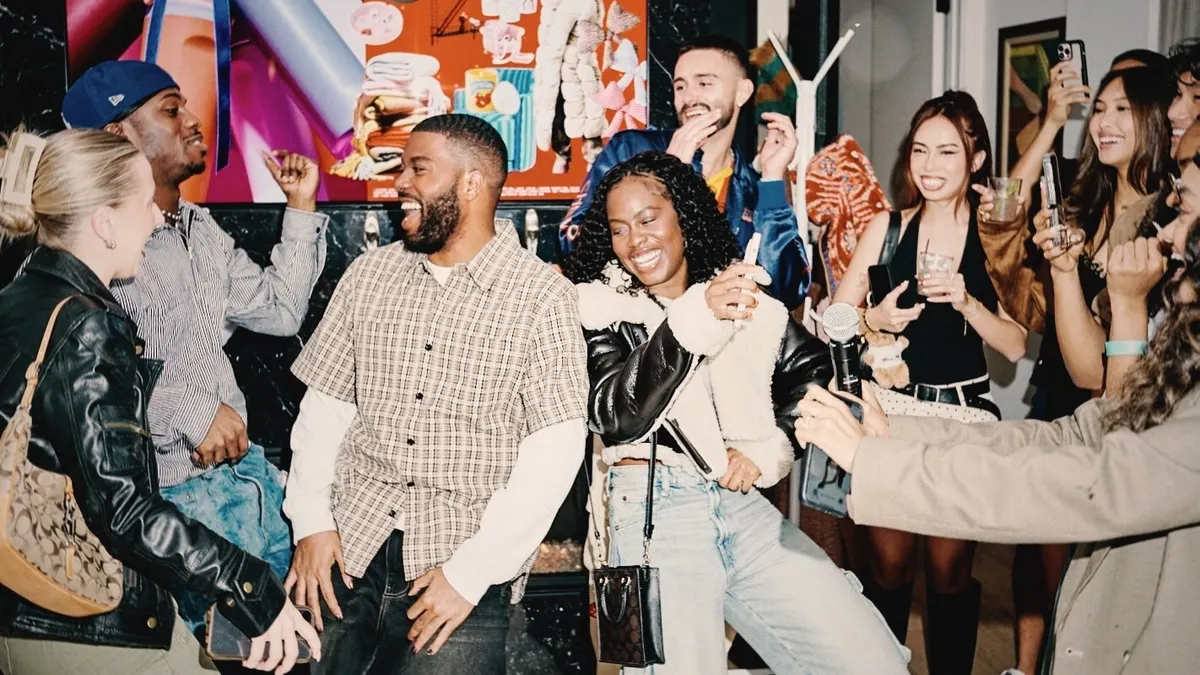
The brand also leveraged Gen Z’s desire for community through creator- and celebrity-led events in Los Angeles and New York City, hosted by R&B singer Khalid and cast members from Bravo’s “Next Gen NYC,” respectively. These events showcased holiday products alongside talent-driven experiences.
Despite being digitally native, Gen Z exhibits a strong preference for in-store experiences. Nearly three-quarters of the cohort Similar News