Urban Outfitters (UO) achieved a remarkable 12.5% comparable net sales increase in Q3 fiscal 2026, a significant jump from the previous quarter's 4.2% growth. This surge contributed to its parent company, URBN, reporting record sales. The retailer attributes much of its recent success to its authentic and coordinated engagement with consumers, particularly its target demographic of younger shoppers, across creative, brand, and performance media. Beyond sales, UO has also seen an uptick in brand affinity and unaided brand awareness metrics.
“From a marketing perspective, we're extremely excited about the progress the team is making,” stated Shea Jensen, President of Urban Outfitters North America, during an earnings call in August. She highlighted that the brand is welcoming more young customers through "compelling creative, culturally relevant conversations and exciting collaborations with brands our customers know and want.”
Purpose-Driven Partnerships Resonate with Gen Z
Urban Outfitters strategically partners with diverse brands—from retailers like Nike to restaurant chains such as Chipotle—to identify and fulfill unmet needs within the Gen Z consumer base. Cyntia Leo, UO’s Head of Marketing, explained that these collaborations and marketing activations are rooted in deep consumer insights.
“We think about partnerships as a way of being in service to our community and to our customer, not just for hype and collaboration. We love hype, we think it's so exciting. But for us, we really like to partner and collaborate with a purpose in mind,” Leo emphasized.
Targeting Key Seasonal Moments
For the youth-focused retailer, the marketing calendar revolves around significant consumer moments, starting with the back-to-school season in September, extending through the holidays, and into an active spring. These include everything from dorm move-in and gift-giving to spring break and music festival season.
For instance, the UO Haul campaign, launched in May, focused on the moving process. This initiative featured a scavenger hunt, a partnership with U-Haul, and a concert by Katseye—the girl group that later drove viral success for competitor Gap. The campaign continued through the summer with an HGTV-sponsored dorm makeover contest, culminating in its first annual UO Haul Sale in July.
“For back to school, we aren't experts in moving. We thought U-Haul would be a great partner for us to bring [something to] that really tremendous, awful time period of trying to move all your stuff and dealing with all that,” Leo said about the collaboration.
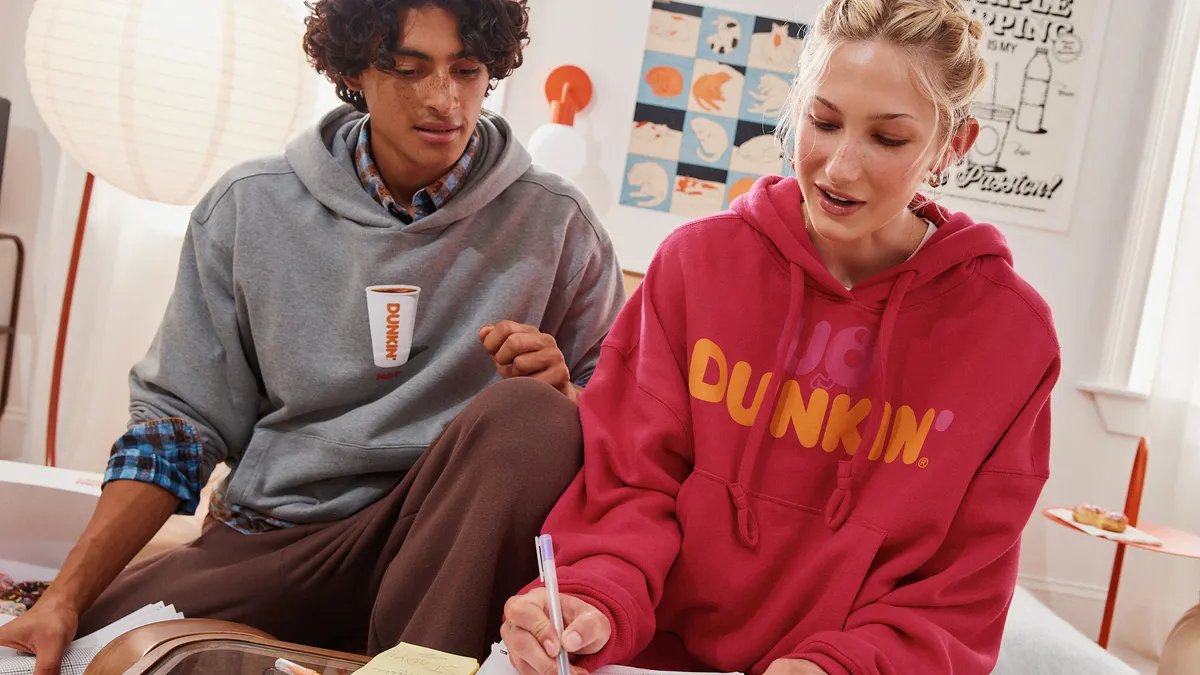
In the fall, Urban Outfitters teamed up with Dunkin’ for a capsule collection, a “100 Days of Coffee” giveaway, and an experiential activation in Boston. This partnership leveraged the popularity of both brands and what UO identifies as Gen Z’s favorite sweet treat. The retailer also continued its long-standing partnership with artist Tinashe, releasing a dance-inspired collection. This collaboration was initially announced last year, following the viral success of her hit song “Nasty.”
“Tinashe is so authentic in that dance world, and we see dance as another great space that our community loves us to be a part of—Urban Outfitters is a destination for a lot of dancers,” Leo explained. “It was an incredible opportunity to come together to build a line that really services both our customers and Tinashe’s amazing community.”
Holiday Strategy and Social Impact
For the crucial holiday season, Urban Outfitters is keenly focused on Gen Z consumers who are reshaping traditional holiday marketing. Internal research revealed that 54% of college-aged customers prefer using wish lists and presentations to share gift ideas. This insight led to a partnership with online design platform Canva for custom design templates. The brand also tapped into Gen Z’s emotional desires to inform its experiential strategy.
“More than ever, they want to feel connection, they want to be with their community and they're celebrating different traditions,” Leo noted. “How can we energize and fuel their needs?”
UO's holiday push also includes supporting six social-impact partners through in-store donations until January: Altadena Girls, Active Minds, Creatives Want Change, GLSEN, BlackStar Projects, and Asian Arts Initiative. These partnerships underscore that while purpose-driven and inclusive marketing may have receded for some brands, they remain vital for connecting with Gen Z.
“We have a 365-day, always-on offense from a social-impact perspective,” Leo affirmed. “We are working with [these organizations] all year round. We're supporting their events, we're sending products, we are doing cash-wrap donations with them, we are also giving back. It is just part of our ethos.”
Measuring Engagement and ROI
As with any marketing strategy, measuring the impact of Urban Outfitters’ partnership activations is crucial, especially as CMOs face increasing pressure to demonstrate results and ROI. For UO, impressions and engagement serve as key performance indicators.
“We don't want to be the brand that just interrupts our customer’s life. We want to be part of their life in a relevant and helpful way,” Leo concluded. “[We’re] thinking about how they engage with us, making sure that we are helping them in some way, making sure that we're providing a service, and then really showing up for them.”