Vaseline, a heritage brand with over 150 years of history, has recently emerged as a top performer for its parent company, Unilever. Driven by a "social-first, innovation-led" marketing strategy, the brand achieved an impressive 11% compounded annual growth rate over the last four years, becoming a billion-dollar entity and growing volume by over 10% in both 2024 and the first half of 2025. This success positions Vaseline as a crucial template for Unilever's broader portfolio, demonstrating a pioneering approach to "desire at scale thinking" that the CPG giant aims to replicate across its brands.
Vaseline's Blueprint for Brand Growth
Unilever CEO Fernando Fernandez lauded Vaseline's journey, stating, "It has been on a remarkable journey, pioneering the kind of desire at scale thinking we want now to replicate across all our brands," during Unilever’s Q2 2025 earnings call. This resurgence is attributed to a dual focus on product innovation that taps into evolving body care trends and a robust marketing strategy emphasizing social-first, culturally-rooted efforts. A prime example is the brand's seamless integration into popular TikTok trends around nighttime routines, such as "slugging."
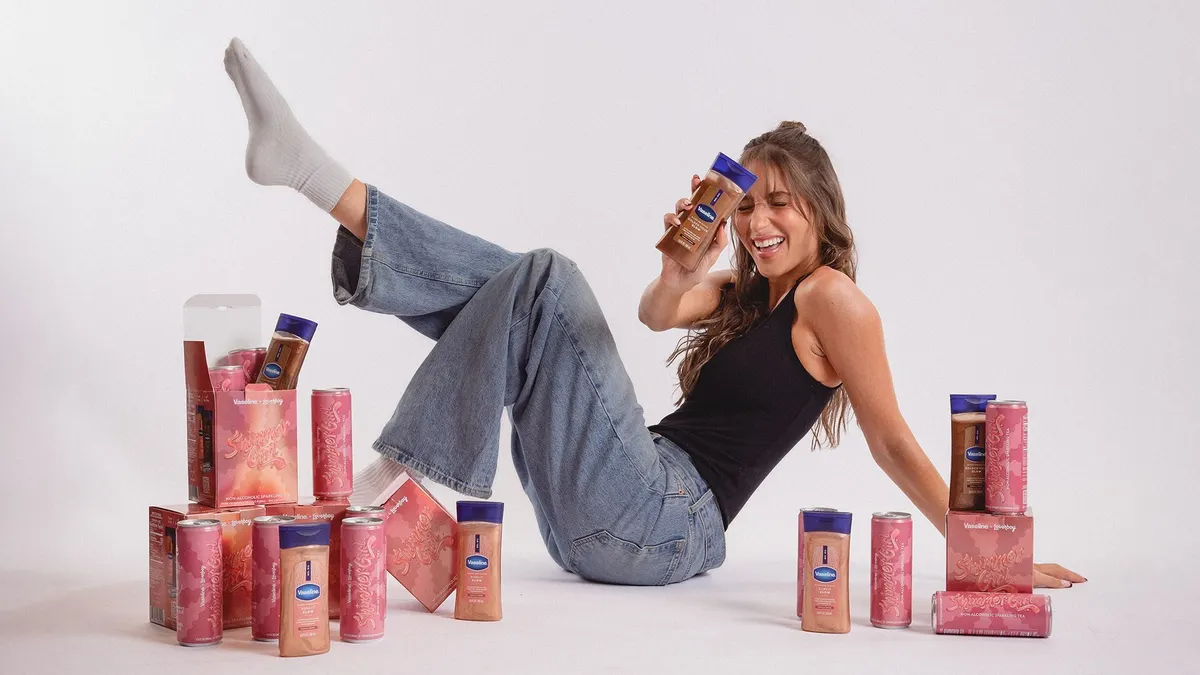
Kate Godbout, Head of Vaseline Brand for North America, explains the strategic shift: "We reallocated our budget to lean much more into creator-led content, as Unilever calls it, leaning more into creators, influencers, [user-generated content] to tell the brand story a bit more, versus only being led by the brand." This approach was evident in a recent collaboration with reality TV star Amanda Batula and her Loverboy beverage brand. The partnership, featuring co-branded packs of iced tea and Vaseline's Glazed & Glisten Gel Oils, sold out within 12 hours of launch following an experiential event in Brooklyn.
“Especially for a heritage brand, the idea of cultivating community is so important. Deeply understanding your consumer on the most intimate level — their hopes, dreams, desires, barriers to using product — beyond basic needs… really understanding their passion points, figuring out how you can tap into that and providing real utility in their lives.”
— Kate Godbout, Head of Vaseline Brand for North America
Integrating Innovation and Marketing at Unilever
Godbout, who joined Unilever in July after a tenure as CMO for Scholl's Wellness Company and previous roles at L'Oréal, Neutrogena, and Mattel, shed light on Unilever's organizational evolution. A structural change within the beauty and wellness group brought together end-to-end marketing, ensuring product innovation and portfolio strategy teams work in close alignment with demand-creation specialists.
These integrated teams, comprising experts in PR, influencer relations, creator-led content, media strategy, traditional advertising, and agency partnerships, convene weekly in a "culture squad." These meetings serve as a dynamic forum to discuss cultural signals and social content traction, fostering action-oriented decisions. Beyond immediate tactics, the "culture squad" also engages in deeper conversations about building social-first innovations. This involves feeding cultural insights into the innovation funnel to inform product names, textures, formats, and digital and in-store content strategies. Godbout highlights the value of embedding agency expertise directly into these weekly discussions, acknowledging the rapid pace of cultural shifts.
The Award-Winning "Vaseline Verified" Campaign
The "Vaseline Verified" campaign stands out as a testament to Vaseline's social-first strategy. Observing over 3.5 million organic social posts, predominantly on TikTok and Instagram, showcasing both expected and unexpected uses of Vaseline, the brand recognized the product's remarkable versatility. Simultaneously, they identified a consumer insight: an overwhelming amount of social information makes it difficult to discern genuine, safe, and effective uses from mere hype.
Vaseline ingeniously brought this community-driven conversation into its labs, making science an integral part of the story. Through a playful and quirky approach, the brand tested various consumer hacks for Vaseline jelly, verifying their safety and effectiveness or debunking them. This initiative involved awarding "creator seals" and pushing out official "Verified" content based on lab-tested uses. The campaign not only showcased a fresh brand personality and fostered co-creation with creators but also yielded significant, quantifiable results: a 43% uplift in sales, over 136 million views, and an impressive 87% positive consumer sentiment.
Measuring Social Impact and Strategic Collaborations
To gauge the impact of its social-first investments, Vaseline employs a system that tracks metrics such as buzz, sentiment, shares, and online discoverability on a quarterly basis. This data-driven approach informs internal discussions aimed at strengthening campaigns. The brand also relies on strong, creative agency partners whose diverse perspectives help mold and shape campaigns toward aligned goals.
Regarding brand collaborations, such as the "White Lotus" partnership in Southeast Asia for Gluta-Hya products, Godbout stresses intentionality. The goal is to elevate brand values, personality, and tonality by aligning with culturally relevant properties that generate buzz and build product relevancy. While acknowledging the risk of consumer fatigue, Godbout believes that "the right partnerships at the right time" can generate substantial value and attract new consumers.
AI as a Marketer's Co-Pilot
Looking ahead, Godbout views artificial intelligence as an invaluable "thought partner and co-pilot" for marketers. She emphasizes that while AI can supplement workflows, particularly in content creation, and offer new perspectives, it won't replace the fundamental principles of brand growth. Vaseline is already integrating AI into parts of its content supply chain, with intentionality, especially for a brand with deep trust and heritage.
Godbout anticipates that AI tools and workflows will free up significant capacity, allowing marketers more time and space for creative and strategic thinking. Automating low-value-added activities will enable teams to "dream and think more expansively about how that manifests in different product executions, activations and ways to connect with our community."