Walmart Connect is rapidly emerging as a formidable advertising powerhouse, significantly outpacing the broader retail media market. Fueled by strategic investments in connected TV (CTV) through its Vizio acquisition, sophisticated measurement solutions, and the integration of artificial intelligence, the platform is redefining how advertisers reach consumers. This transformation highlights Walmart's growing influence beyond traditional retail, solidifying its position as a key player in the digital advertising landscape.
According to eMarketer, the retail media sector is projected to grow by approximately 20% in 2025, as advertisers increasingly rely on these channels to leverage retailers' first-party data and engage consumers closer to the point of sale. Walmart Connect has dramatically exceeded this market trend, reporting a 33% growth rate in the U.S. last quarter. This impressive growth is six times faster than Walmart's overall sales increase and, alongside membership fees, accounts for roughly a third of its operating income.
"Advertising has been one of the areas of our business that has changed the most, or better said, the impact or influence from that has changed our P&L the most," stated John David Rainey, Walmart's Executive Vice President and CFO, at the Morgan Stanley Global Consumer & Retail Conference. "As we've gained share, advertisers, they want to follow the eyeballs. And so we've done really well in advertising."
Walmart's immense scale underpins its advertising success. The retailer engages 150 million customers weekly across its website, app, and physical stores. With the ability to reach 95% of the U.S. population with same-day delivery, Walmart offers a significant competitive advantage, particularly during peak shopping seasons. Furthermore, its 4,600 stores provide not just traditional consumer spending opportunities but also a fertile ground for on-site retail media. This vast reach, combined with robust investment in measurement and its burgeoning CTV capabilities, is propelling Walmart Connect to the forefront of the advertising industry.
"Walmart Connect has expanded from performance-based media to full-funnel solutions, focusing on new experiences across all customer touch points," wrote Seth Dallaire, Executive Vice President and Chief Growth Officer at Walmart U.S., in a recent LinkedIn post. "We've made significant strides in aligning and optimizing our advertising technology platforms, streamlining efficiency and expanding top-of-funnel opportunities for advertisers."
Integrating Vizio for CTV Prowess
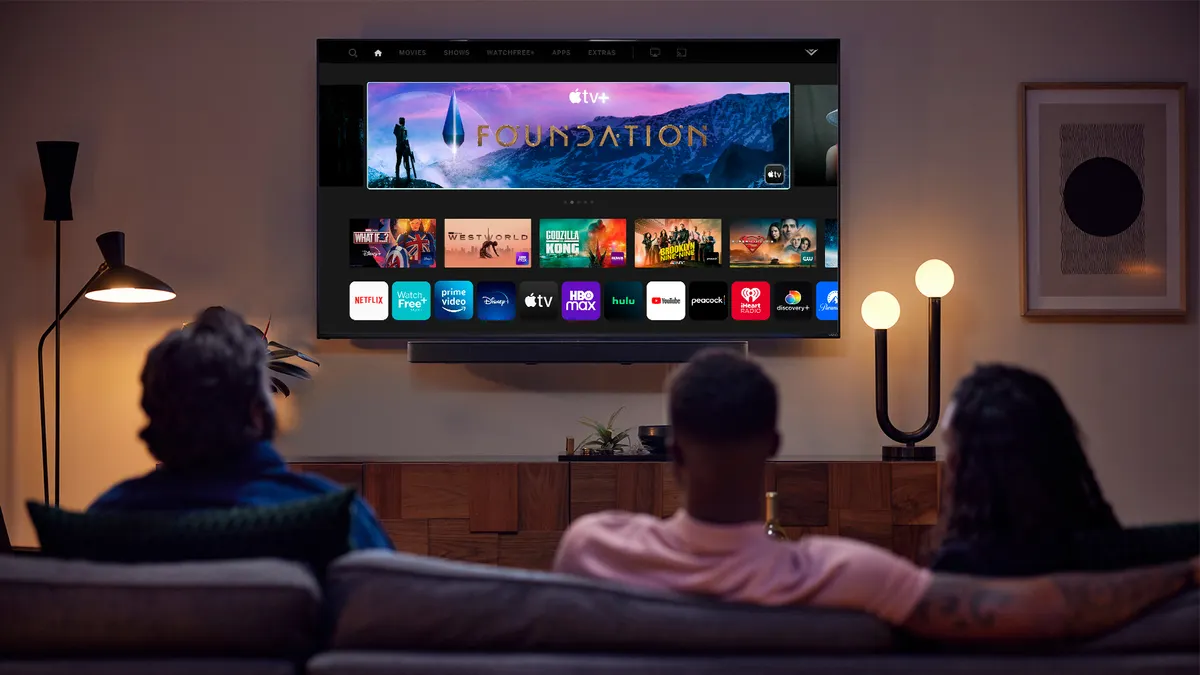
One year after completing its acquisition of smart TV maker Vizio, Walmart is realizing substantial returns on its investment. The company's global advertising business, including Vizio, saw over 50% growth last quarter. This strategic move into the CTV space has been instrumental in attracting non-endemic advertisers from sectors like automotive, financial services, and quick-service restaurants (QSR), with some becoming major advertisers on the Walmart DSP (Demand-Side Platform).
"CTV as a whole is the fastest growing part of Walmart Connect, and Vizio is helping to fuel that," Ryan Mayward, Senior Vice President of Sales at Walmart Connect, told Marketing Dive.
The Vizio integration began by enabling advertisers to target Walmart customers based on their shopping history and then measure the direct sales impact of ads displayed on Vizio screens. This includes both Vizio's free, ad-supported streaming service and other ad-supported applications accessible through its operating system. Recently, Walmart expanded its offerings to include advertising on the Vizio home screen, leveraging Walmart's rich audience data for precise targeting and measurement. The company is also introducing a bundled offering that combines Vizio's home screen with the Walmart app's home screen, with plans for more concurrent advertising across various surfaces in the future. Looking ahead, Walmart intends to roll out Vizio's operating system on its private-label Onn TVs, potentially extending Vizio OS's reach to 25% to 30% of U.S. households.
"One of the reasons we're so excited about Vizio is when customers see CTV ads, they are 28% more likely to buy products from Walmart," Mayward explained. "The more customer touch points that a brand leverages, the more they will sell."
Advanced Measurement Across All Surfaces
Walmart has made significant investments in implementing closed-loop measurement across its entire suite of ad products. This encompasses search, display, video, and in-app ads, as well as off-site products, social media, and CTV ads purchased through the Walmart DSP. For the past year, the retailer has provided an incremental return on ad spend (iROAS) metric for search, adding a crucial dimension of incrementality beyond its existing display and video offerings.
"We're reporting on the volume of incremental sales and the efficiency of incremental sales, and the results have been great," Mayward affirmed. "When we talk about retail media trends, iROAS is what everybody wants for every retail media ad product, and that's where we're headed. Signals have been important, and then our solutions are getting more robust."
The retailer now offers closed-loop measurement partnerships with major platforms like TikTok, various TV networks, and Meta. The collaboration with Meta builds on a previous relationship, now extending to comprehensive ROAS measurement. Walmart provides measurement through its own DSP and via bespoke integrations, such as the one rolled out last year with Disney.
"The thing that brands expect from us is consistent metrics across every advertising surface, whether in a Walmart store or outside of a Walmart store, and that's really what we're delivering to them," Mayward emphasized.
Beyond digital, Walmart is also actively developing its capabilities in in-store retail media, an area that has historically struggled to gain traction in the U.S. The company is investing in both the necessary hardware and adtech to activate in-store advertising, focusing on introducing contextually relevant, customer-first ads. The goal is to better measure the brand lift and sales lift generated by ads displayed across in-store screens.
"You're not going to see ads for power cords and screwdrivers on the bakery screen. We're going to show ads that are relevant to a food shopping experience," Mayward clarified.
The AI Playbook for Future Growth
While in-store media represents a significant frontier, artificial intelligence continues to fundamentally reshape the entire advertising landscape. Walmart Connect is expected to make further AI-related announcements at the annual CES trade show in January, but it has already integrated AI into several components of its adtech stack. AI powers its creative builder, enabling the rapid, cost-effective, and high-quality creation of image and video content. The technology also drives a programmatic solution that has democratized advertiser access to display inventory within its app and has enhanced bidding and optimization within the search experience. Similarly, AI is assisting brands in quickly building their own digital storefronts within the Walmart app.
Beyond advertising, Walmart is exploring AI through initiatives like Sparky, its customer-facing generative AI assistant, and a partnership with OpenAI aimed at integrating shopping into ChatGPT. While the rise of agentic commerce could transform consumer shopping habits and, consequently, advertiser spending on Walmart Connect, the retailer is embracing this era of experimentation.
"The playbook for the next phase of commerce, marketing, advertising, adtech and content creation – it's going to be written in real time," Mayward concluded, underscoring the dynamic nature of the industry.