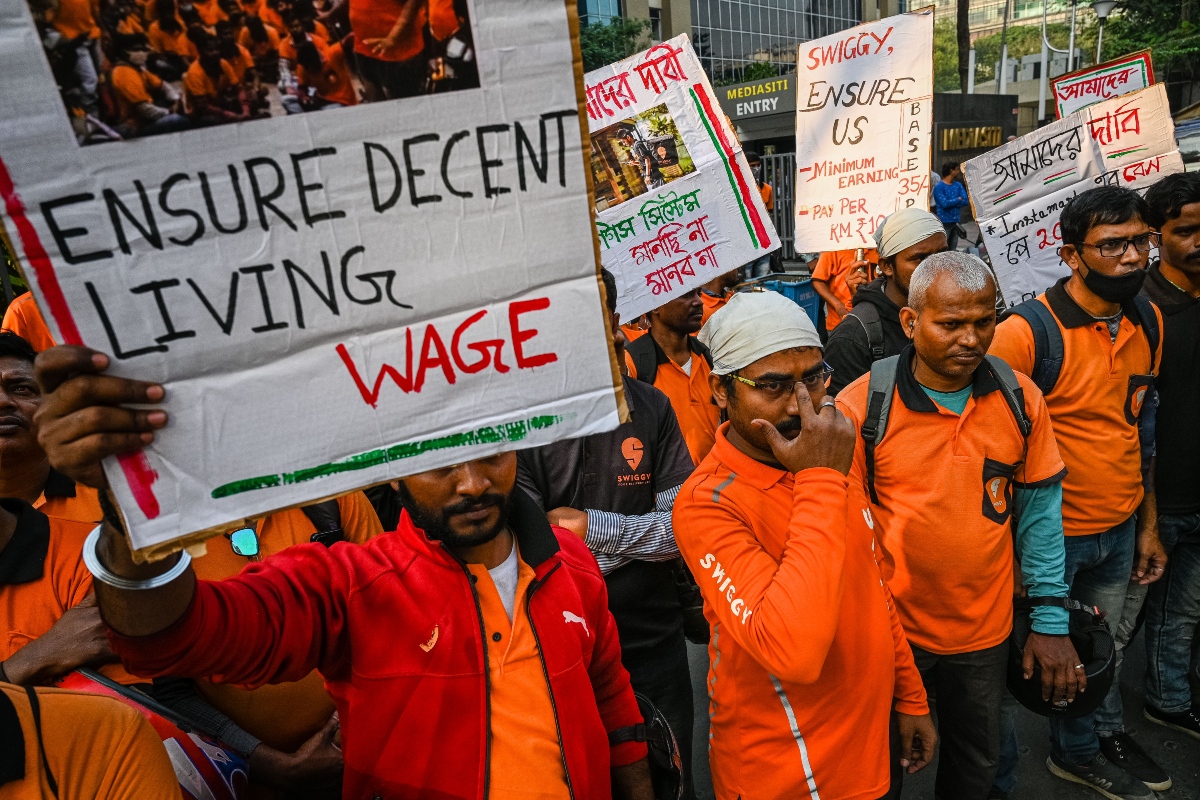
India has officially recognized millions of gig and platform workers under its recently implemented labor laws, marking a significant milestone for the country's vast delivery, ride-hailing, and e-commerce sectors. This legal recognition, primarily through the Code on Social Security, comes more than five years after parliament first passed the legislation. While a crucial step, the actual access to social security benefits for these workers remains largely undefined, with platforms still assessing their new obligations.
Notably, this Code is the only one among the four new labor laws (the others covering wages, industrial relations, and workplace safety) that addresses gig and platform workers, leaving them without explicit minimum earnings, employment protections, or working-condition guarantees under the broader framework.
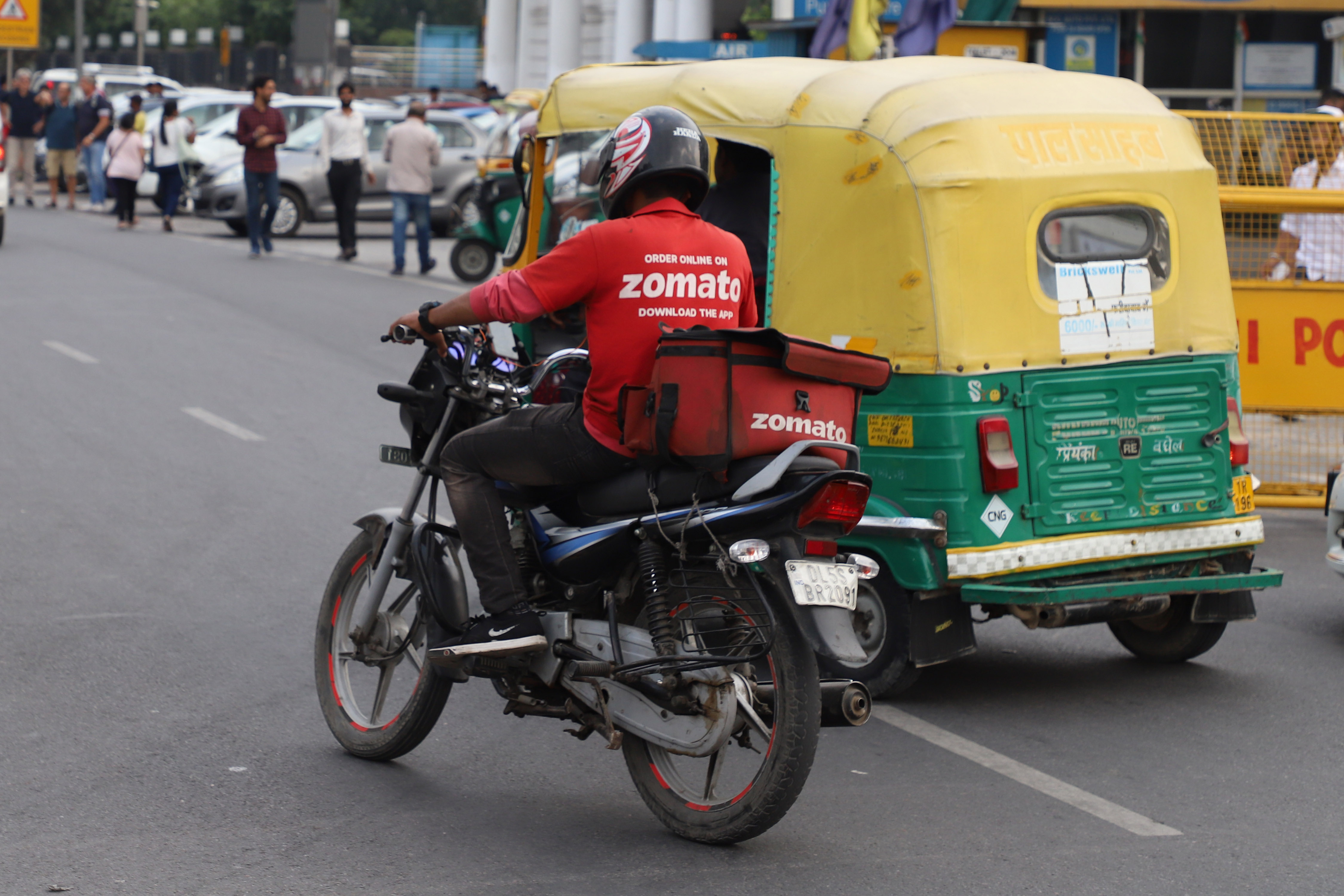
India boasts one of the world's largest and fastest-growing gig economies, with estimates suggesting over 12 million people are engaged in food delivery, ride-hailing, e-commerce logistics, and other on-demand services. This sector has become a vital employment source, particularly for young and migrant workers, and is projected to expand further. Major players like Amazon, Walmart-owned Flipkart, Indian quick-delivery apps such as Swiggy, Blinkit (formerly Eternal), and Zepto, alongside ride-hailing giants Uber, Ola, and Rapido, heavily depend on this workforce to operate in the nation, which is the world's second-largest internet and smartphone market. Despite their crucial role in powering India's most valuable tech businesses, most gig workers have historically operated outside traditional labor protections, lacking access to basic social security.
The new labor laws aim to rectify this by formally defining gig and platform workers and mandating aggregators (like food-delivery and ride-hailing platforms) to contribute 1-2% of their annual revenue (capped at 5% of payments to workers) to a government-managed social security fund. However, critical details remain opaque: the exact benefits, how workers will access them, how contributions will be tracked across multiple platforms, and when payouts will commence are all unclear. This ambiguity raises concerns that meaningful protections could take years to fully materialize.
The Code on Social Security establishes a legal framework for gig workers to be included in schemes such as the Employees' State Insurance, provident fund, and government-backed insurance. Yet, the specifics of these benefits—including eligibility, contribution levels, and delivery mechanisms—are still vague and contingent on future rules and scheme notifications. A central component of this framework is the establishment of Social Security Boards at both central and state levels, tasked with designing and overseeing welfare schemes. The central board is mandated to include five representatives each from gig workers and aggregators, nominated by the government, alongside officials and experts. Nevertheless, clarity is lacking on decision-making processes, the actual influence of worker representatives, and who will ultimately control funding and benefit distribution.
Balaji Parthasarathy, a professor at IIIT Bangalore and principal investigator of the Fairwork India project, emphasized the need to observe the government's implementation strategy and its intentions for gig workers. He highlighted that India's labor policy falls under the "concurrent list" of the Constitution, meaning both federal and state governments share responsibility. Consequently, state governments are crucial for designing, notifying, and administering many of the schemes required to operationalize the Code on Social Security for gig workers. This shared jurisdiction creates the potential for uneven access to benefits, as some states may swiftly establish boards and mechanisms, while others might face delays or deprioritize efforts due to political or fiscal constraints. Past examples, such as Rajasthan's stalled legislation after it was passed in 2023, and Karnataka's Gig Workers Act, which was implemented soon after clearing the state assembly, illustrate how worker protections could ultimately depend on their geographical location rather than the law itself.
Industry Reactions and Compliance Challenges
Platform companies have largely welcomed the reform publicly but are still evaluating its full requirements. An Amazon India spokesperson confirmed the company's support for the government's intent and is assessing necessary changes. Zepto expressed approval, calling the new codes "a big step toward clearer, simpler rules that protect workers while supporting ease of doing business," adding that the changes would help strengthen social security for delivery partners without undermining operational flexibility. Blinkit (formerly Zomato) stated in a stock exchange filing that the Social Security Code moves towards more uniform rules and does not anticipate a significant financial impact on its long-term business.
Despite the cautious optimism, Aprajita Rana, a partner at corporate law firm AZB & Partners, noted that the formalization of worker contributions "will naturally have a financial impact" on India's e-commerce sector. It will also introduce new compliance obligations for companies, requiring them to ensure all network workers are registered with the government fund, manage potential duplicative benefits for individuals associated with multiple aggregators, and establish internal grievance mechanisms. Rana concluded, "While the law has the right intent, gig worker structures in India are quite novel, and practical challenges in compliance will emerge as the law takes force."
Worker Concerns and the E-Shram Portal
A significant hurdle for gig workers seeking benefits under the new law is registration on the Indian government's E-Shram portal, a national database for unorganized workers launched in 2021. As of late August, the portal had registered over 300,000 platform workers, a stark contrast to the government's estimate of India's gig workforce at around 10 million. Trade unions, including the Indian Federation of App-Based Transport Workers (IFAT), are actively assisting workers with enrollment.
Ambika Tandon, a PhD candidate at the University of Cambridge and an affiliate of the Centre of Indian Trade Unions (CITU), pointed out that registering on the E-Shram portal could lead to lost wages for gig workers who would need to take time off to complete the process. "These workers work for 16 hours a day," she stated, "They don't have time to go and register themselves on the government portal." CITU is also among ten major Indian trade unions advocating for the withdrawal of the new labor laws, with nationwide protests planned. Tandon further noted that the E-Shram portal's benefits are not compelling for many gig workers because the law fails to address their more immediate concerns, such as fluctuating earnings, account suspensions, and sudden terminations—issues they prioritize over insurance or provident fund benefits.