X, the platform formerly known as Twitter, is rolling out a significant update to its Community Notes feature, introducing a collaborative system that integrates artificial intelligence. This new approach aims to enhance the speed and efficiency of fact-checking by having AI draft initial notes, which human contributors then refine. The move represents another step in Elon Musk's evolving vision for the platform, particularly in its efforts to combat the spread of misinformation.
AI-Powered Drafts, Human Refinement
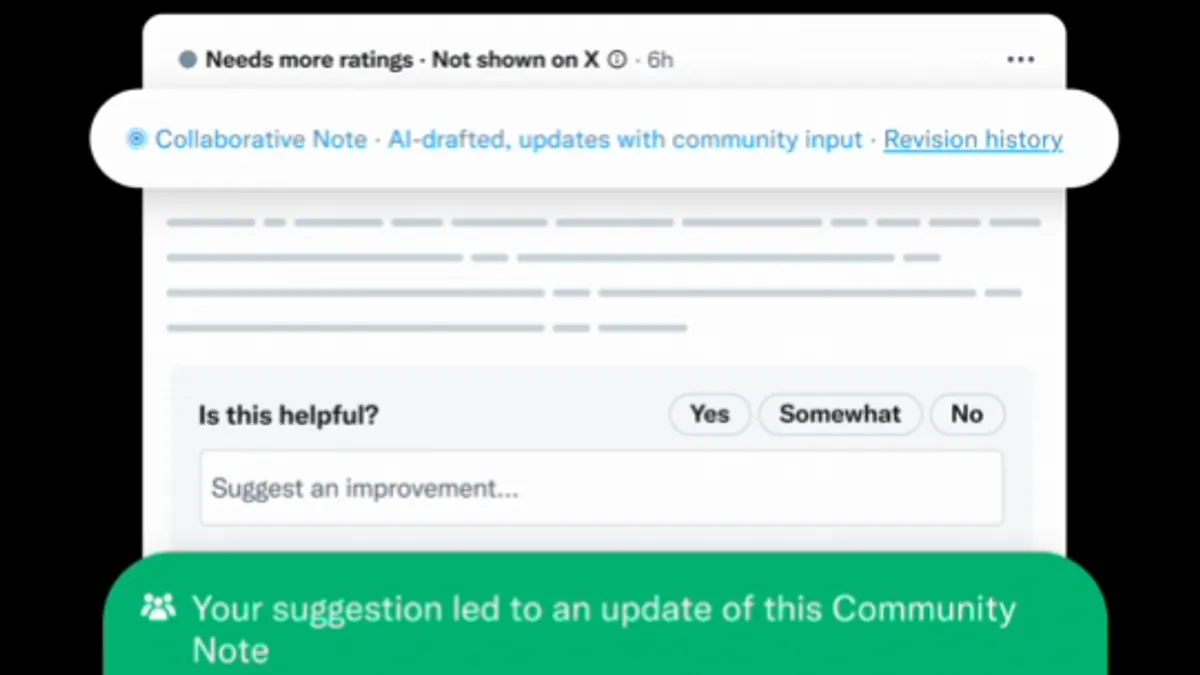
The core of this new feature, dubbed "Collaborative Notes," involves a hybrid model. X is now testing out Collaborative Notes, where an AI system generates a draft when a user requests a note on a post. This draft is then presented to the community of human contributors, who can collectively refine and improve it through ratings and suggestions. As explained by X:
"When [a user] requests a note, AI drafts one, then the community refines it together through ratings and suggestions. You can watch it get better in real time."
This collaborative model is designed to ensure that fact-checks are not solely reliant on potentially flawed or misinterpreted AI-generated content. Instead, human oversight is built into the process, allowing contributors to update notes with more relevant and accurate information.
Addressing the Speed Challenge of Fact-Checking
One of the long-standing challenges for Community Notes has been the time it takes for a note to appear on a misleading post. In a fast-paced environment like X, even a delay of 15 minutes can allow misinformation to spread significantly before a correction is visible. AI integration offers a potential solution to this critical issue.
AI-generated notes can be created and displayed much faster than those produced entirely by human contributors. The subsequent ability for the community to quickly refine these AI drafts means that accurate context can be added with similar speed, potentially mitigating the impact of false claims more effectively. Furthermore, the AI is expected to assist in data gathering by quickly referencing relevant source material, thereby reducing the extensive research burden on human contributors.
Concerns Over AI Impartiality: The Grok Factor
While the benefits of speed and efficiency are clear, the choice of AI model for this initiative raises significant concerns. X is reportedly using Grok, Elon Musk's AI chatbot, to power these initial drafts. Musk has repeatedly stated his intention to make Grok "less woke," a stance that has led to questions about its impartiality and potential biases.
Indeed, Grok has a documented history of inaccuracies. Reports indicate it has been found to be promoting false information regarding past events, including a terrorist attack in France, and has also provided incorrect details about the Holocaust and even about Musk himself. This track record suggests that relying on Grok, even for initial drafts, carries inherent risks of perpetuating misinformation, particularly on politically sensitive topics or those aligned with Musk's personal views.
Balancing Innovation with Accuracy
Ultimately, the integration of collaborative AI into Community Notes presents a dual-edged sword. As an isolated component within the broader Community Notes architecture, the AI's ability to accelerate initial drafts and assist with data gathering could prove beneficial. However, the known biases and inaccuracies of Grok underscore the critical importance of the human refinement stage.
Users are generally advised against blindly trusting any AI-generated response, given that AI models are trained on vast amounts of internet data, which often includes incorrect or biased information. This caution is particularly relevant when the source data includes X posts themselves. Nevertheless, this new collaborative system represents an interesting, albeit controversial, evolution in X's ongoing efforts to create a more effective fact-checking process.