Digital analytics leader DoubleVerify has released its latest "Global Insights" reports, offering crucial data for businesses planning their 2026 digital marketing strategies. Based on surveys of over 22,000 consumers and nearly 2,000 marketers, the reports delve into evolving trends across social media, AI, and online shopping, providing valuable direction for platform and approach focus.
While the complete DoubleVerify Global Insights reports are available for download here (requiring email sign-up), this article highlights some of the most significant findings.
Key Social Media Usage Trends
The report first identifies the most popular social media platforms among surveyed consumers. YouTube, Facebook, and Instagram consistently lead in overall usage, followed by TikTok, X (formerly Twitter), LinkedIn, and Pinterest. This general ranking aligns with broader industry reports on social media adoption. The study notes that newer platforms like Threads and Bluesky were not included in the survey options.
Social Media as a News Source
DoubleVerify also examined how social media influences news consumption, a factor that can significantly impact information flow and public opinion. The findings indicate a clear generational divide: younger audiences predominantly rely on social media for news, while older consumers continue to favor traditional television news and dedicated news websites.
Product Research and Pre-Purchase Behavior
The study further explores how consumers utilize social platforms for product research during the pre-purchase phase. It highlights that while social media may rank lower for direct product research compared to other sources, this metric specifically addresses the research stage, not initial product discovery or awareness, where social platforms likely play a more significant role.
The Growing Impact of Influencer Marketing
The report underscores the increasing influence of social media personalities on consumer purchasing decisions.
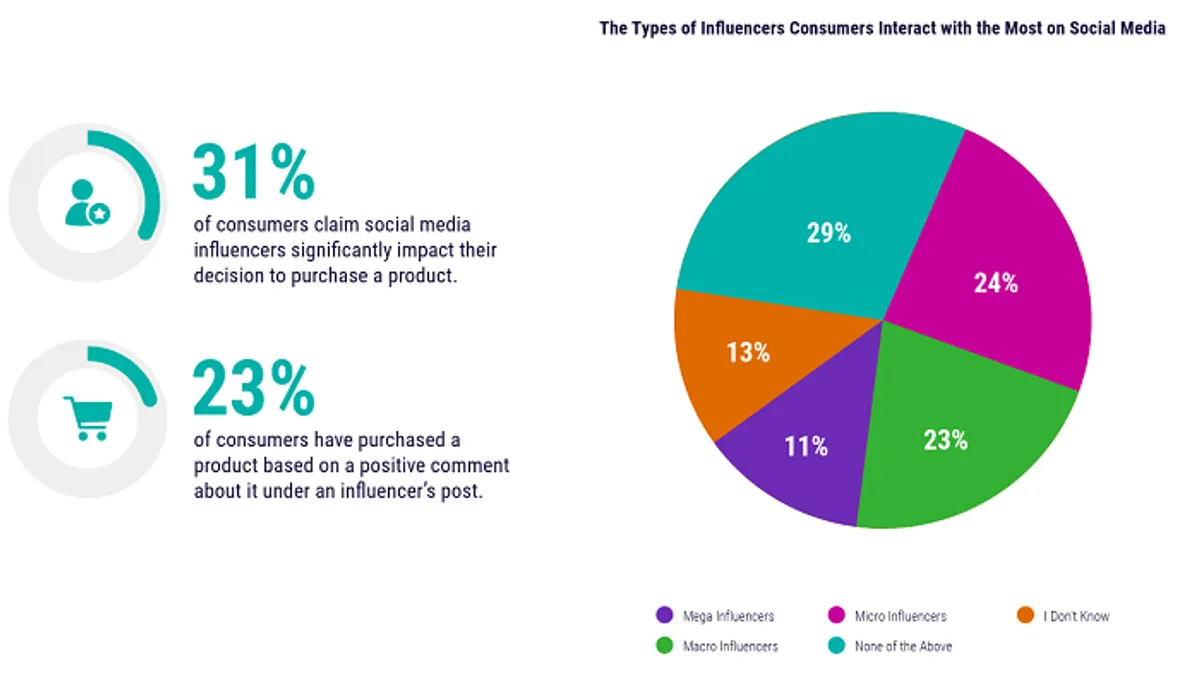
"Over 58% of surveyed consumers stated that they interact (follow, like, share, comment) with influencers, especially micro influencers (24%). The lower-funnel strength of these interactions is also high - 54% of consumers reported that social media influencers impact their purchase decisions."
This data indicates that influencers, particularly micro-influencers, are becoming increasingly effective in driving engagement and shaping consumer choices, with a significant portion of consumers relying on them for product information and recommendations.
The Global Landscape of Social Commerce
Social commerce continues its global expansion, with the report highlighting distinct regional adoption rates. While Asian markets show a higher embrace of integrated social media shopping experiences, Western consumers tend to use separate applications and tools for different functions. The report suggests this disparity may stem from varying preferences for in-app utility, trust levels in social commerce, and differing regulatory environments.
Marketer Strategies and AI Integration
Beyond consumer behavior, the DoubleVerify report also provides valuable insights into how marketers leverage social applications, detailing which platforms yield the best results across various categories. Furthermore, it touches upon the growing adoption of AI among both consumers and marketers, noting the increasing prevalence of AI-generated content and the challenges it poses in distinguishing authentic from artificial information. These findings offer crucial considerations for digital marketing planning in 2026.
For a comprehensive understanding of these evolving trends, the full DoubleVerify Global Insights reports are available for download here (email sign-up required).