


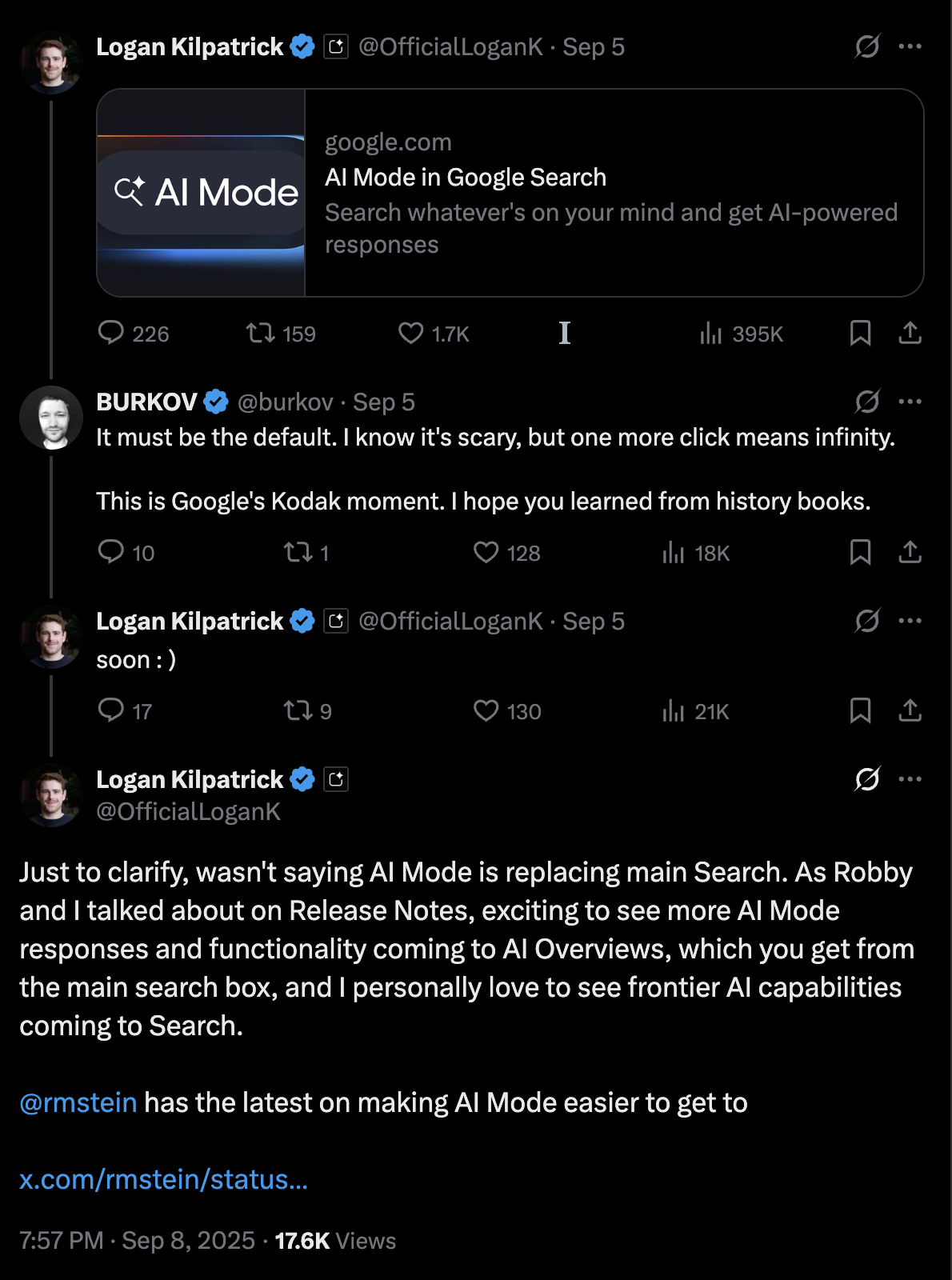
AI search is rapidly changing how people discover content and interact with brands. A recent post by Logan Kilpatrick, Google’s lead product manager for AI products, hinted that “AI Mode” could soon become the default for Google Search. While Kilpatrick later clarified his remarks, the prospect raises significant questions for the SEO industry, especially with Google reporting over 100 million monthly active users already engaging with AI Mode. This potential shift signals a monumental change in how businesses achieve online visibility, drive traffic, and build trust.
Before delving into the potential implications, it is crucial to distinguish between AI Mode and AI Overviews, as they serve different functions within Google’s evolving search landscape.
 Screenshot from X (Twitter), November 2025
AI Overviews Versus AI Mode
AI Overviews are concise, AI-generated summaries that appear above traditional search results for specific queries. They aim to provide quick answers, saving users time by reducing the need to click on external links, which consequently lowers traffic to brands.
AI Mode, introduced on Google’s search page earlier this year, offers a more advanced and interactive search experience. It is designed to handle complex, multi-step, or open-ended questions by providing comprehensive, conversational AI-powered responses. Google’s intent with AI Mode is to retain its vast user base amidst the rise of other AI models, potentially replacing the standard search results page in the future.
What Could Happen If AI Mode Becomes Default?
A default shift to AI Mode would almost certainly lead to a significant decline in organic traffic for brands. Users, finding direct and comprehensive answers within the AI interface, would have less need to click through to external websites. This trend is already evident with AI Overviews, but a full transition to AI Mode would amplify the reduction in website clicks.
Brands May Rely More On Paid Visibility
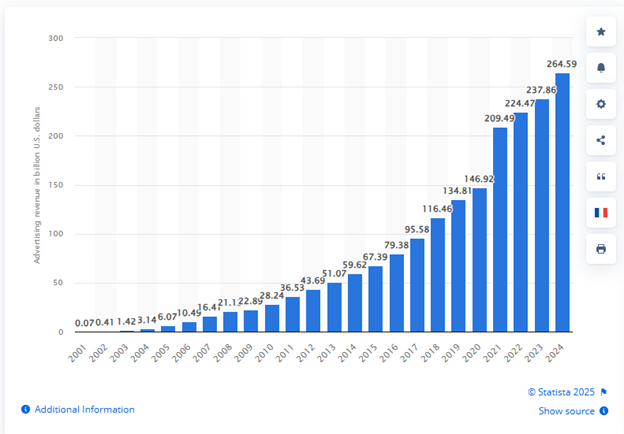
Currently, AI Mode lacks advertising, presenting a monetization challenge for Google. However, this is set to change rapidly. Liz Reid, Google’s Head of Search, has outlined the company's strategy to integrate ads into its AI transition, crucial for sustaining its multi-billion-dollar advertising revenue, which reached $264.59 billion in 2024 according to Statista and continues to grow annually.
 Screenshot from Statista, November 2025
Google is already in the early stages of rolling out ads within AI Mode, focusing on high-quality and relevant placements. Liz Reid notes that AI Mode queries are typically two to three times longer than traditional searches, enabling more precise targeting and higher-quality ad delivery. This means brands willing to invest in paid visibility within AI Mode will gain a significant advantage, potentially leaving behind those solely reliant on conventional SEO strategies. Google has also already integrated advertisements into AI Overviews, indicating a clear path for monetization in AI Mode.
A Potential Shift In Visibility And Discovery
AI search is prompting a departure from traditional SEO metrics like keyword rankings and click-through rates, shifting focus towards brand visibility and relevance. For brands, the new imperative is to be cited as an authoritative source for AI answers; failure to achieve this visibility will result in lost clicks.
Measurement Challenges
Tracking the customer journey will become more complex as user interactions increasingly occur within the AI interface rather than directly on brand websites. Traditional analytics will offer diminished insights, compelling brands to develop new metrics centered on AI citations, brand mentions, and local visibility. This shift is already driving the emergence of specialized AI tools from established players like Semrush and Ahrefs, as well as newcomers such as PeecAI and Profound.
Loss Of Control Over Brand Narrative
As AI Overviews synthesize information from diverse online sources to construct a brand's presence, an inconsistent, outdated, or poorly managed online narrative—spanning reviews, social signals, and local listings—risks inaccurate representation by AI across the web. A robust brand strategy is therefore more critical than ever.
What Could Potentially Happen To Google Chrome?
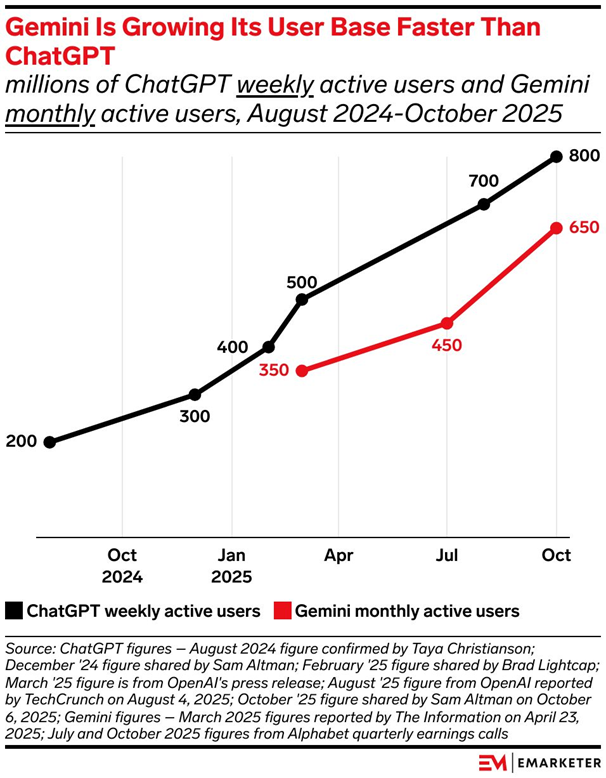
Should AI Mode become Google's default, its Chrome browser could see a significant transformation. Deep integration with Gemini and other AI capabilities would evolve Chrome from a passive browsing tool into a proactive, intelligent assistant. This move is timely, as eMarketer reports Gemini is already outpacing ChatGPT in user base growth.
 Screenshot from eMarketer, November 2025
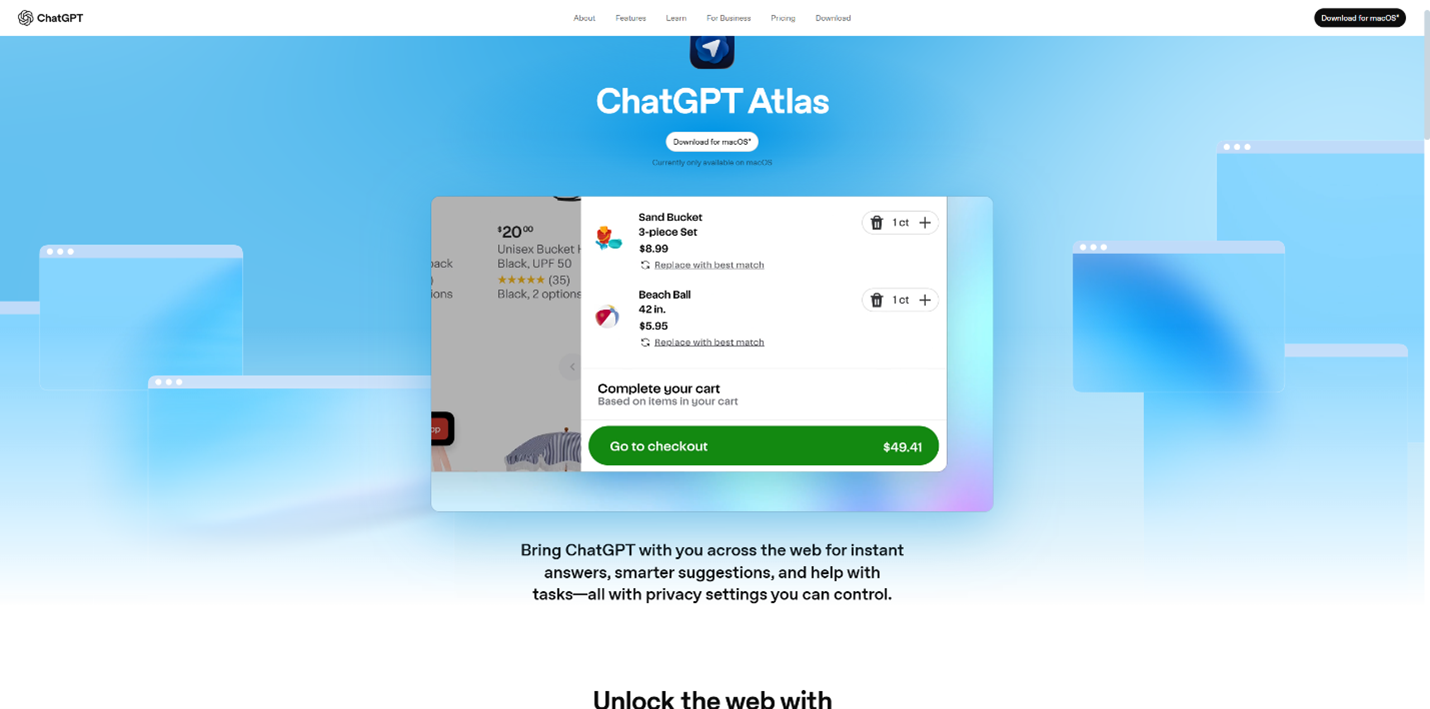
Adding to the competitive landscape, OpenAI has launched ChatGPT Atlas, an AI browser currently exclusive to macOS, directly challenging Google Chrome's dominance.
Similar News

Google Confirms Search Console Indexing Report Delays
Google has confirmed that its Search Console Page indexing report is experiencing significant data delays. This article details the impact on website owners and clarifies that core crawling and indexing functions are not affected.

Google AI Search: AI Mode Hits 75M, Gemini 3 Flash & Citation Gaps
This article provides a comprehensive update on Google's latest AI search developments, including user growth for AI Mode, the launch of Gemini 3 Flash, and crucial insights into how AI Mode and AI Overviews cite sources differently.

Cava Drives Social-First Marketing with 'Bowlmates' Dating Microseries
This article details Cava's innovative social-first marketing strategy, highlighting the success and expansion of its "Bowlmates" dating microseries, and its focus on organic, fan-driven content to engage younger demographics.


Google's Year in Search 2025: Top Trends Revealed
Google's annual "Year in Search" report for 2025 highlights the most significant trending topics, people, events, and cultural moments that captivated users worldwide and in the United States. From the rise of AI tools like Gemini to major global news, popular entertainment, and sporting events, this report offers a comprehensive look at what captured collective curiosity throughout the year.

B2B Content Marketing: Principles for Strategic Growth
This article delves into the transformative principles of modern B2B content marketing strategy, moving beyond traditional broadcasting to foster community, build trust, and drive measurable business outcomes. Learn how to create unique advantages, align content with business goals, and execute strategies efficiently for exponential impact.