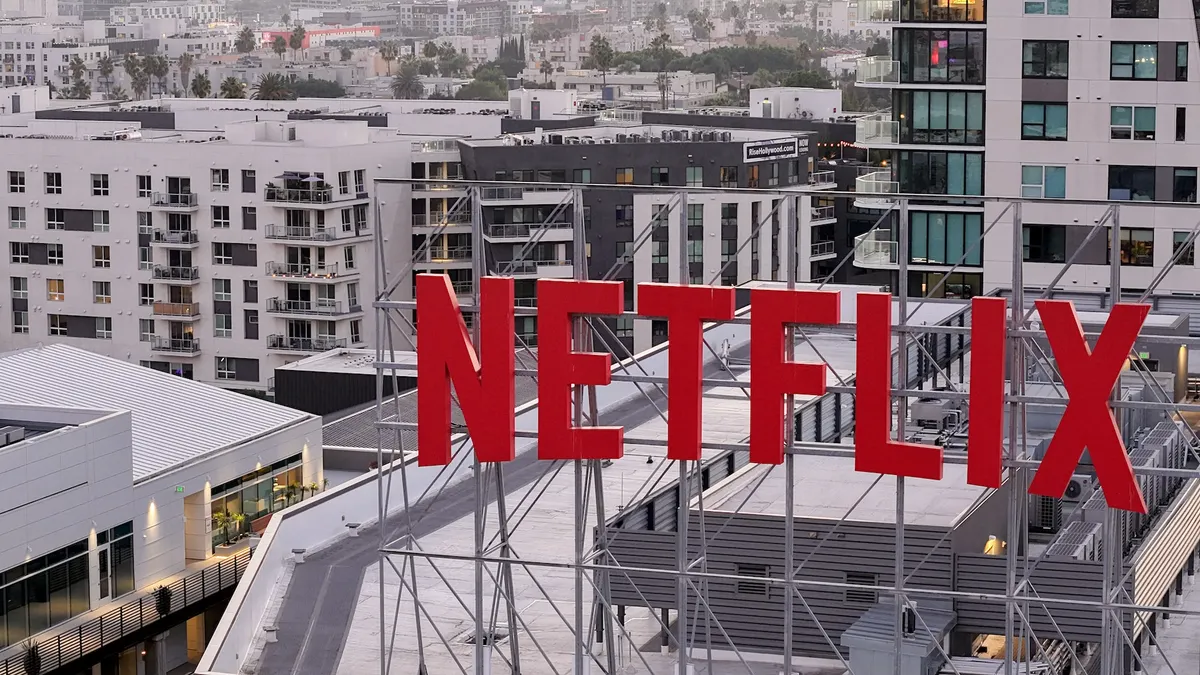
Netflix has entered into a definitive agreement to acquire Warner Bros. in a landmark cash-and-stock transaction valued at $72 billion. This monumental deal, which includes the iconic Warner Bros. movie studio and the HBO Max streaming platform, is poised to fundamentally reshape the competitive landscape of the streaming industry and accelerate Netflix's strategic expansion into advertising.
The acquisition, detailed in a press release, will proceed after parent company Warner Bros. Discovery spins off its global networks division, Discovery Global, into a separate publicly traded entity. This separation is anticipated to conclude by the third quarter of next year.
A New Media Behemoth Emerges
The union of Netflix and Warner Bros. would forge an unparalleled titan in media and entertainment. It brings together Netflix, the powerhouse behind global streaming phenomena like Stranger Things and Squid Game, with a studio boasting invaluable intellectual property from the DC Comics universe, Harry Potter, and the prestigious HBO catalog. For Netflix, this acquisition also provides a significant pathway to intensify its foray into advertising, an area where Warner Bros. has already established a strong presence with HBO Max.
Analysts at Madison and Wall estimate that a combined Netflix-Warner Bros. entity could generate approximately $2.3 billion in U.S. advertising revenue and command a substantial 10% share of total TV viewing in the region.
"This acquisition will improve our offering and accelerate our business for decades to come," stated Greg Peters, co-CEO of Netflix, in a press statement regarding the news.
Navigating Regulatory Hurdles and Market Reactions
Netflix reportedly emerged victorious from a competitive bidding war for Warner Bros., outmaneuvering rivals such as Paramount Skydance and NBCUniversal parent Comcast. While the deal carries an enterprise value of approximately $82.7 billion, it faces a "substantial risk" in securing regulatory approval, according to Madison and Wall. Regulators may express concerns over the potential for increased media consolidation, especially given the current administration's past favor towards Paramount. Following the announcement, Netflix shares experienced a decline on Friday.
Should the transaction receive regulatory clearance, it could signify a pivotal moment for a legacy media ecosystem that has been significantly impacted by cord-cutting.
"If this deal makes it through regulatory approval, Netflix will cement itself as the Goliath of streaming services now with the combined weight of HBO Max and the content studios behind it all," commented Mike Proulx, vice president and research director at Forrester. "This deal changes the calculus of the streaming wars, representing a seismic shift in the entertainment industry."
Netflix's Evolving Strategy: From Content to Ads
Historically, Netflix has championed a "build, not buy" philosophy, making this acquisition particularly noteworthy beyond its hefty price tag. Furthermore, the streamer was once famously averse to advertising, a stark contrast to its current strategy where advertising is now a cornerstone of its future growth agenda.
Netflix is on track to double its ad revenue this year and currently engages 190 million monthly active viewers on its ad-supported tier, which launched in 2022. The company has also been enhancing its advertising capabilities for brands through the development of a proprietary ad-tech platform powered by first-party data. This pursuit of advertising scale has also prompted Netflix to forge more partnerships, including one with Amazon, a direct competitor in the streaming content arena.
This potential convergence of Netflix and Warner Bros. follows other significant consolidations within the broader marketing and media landscape, such as Omnicom's recent $13 billion-plus takeover of Interpublic Group, which created the world's largest marketing services provider.