For decades, "watching TV" was synonymous with settling onto the couch for a favorite weekly show or a featured movie. While streaming and on-demand programming initiated changes in how consumers accessed content, CPG brands largely maintained predictable access to a broad audience. However, the landscape of consumer TV viewing is undergoing yet another significant transformation, presenting both challenges and unique opportunities for CPG (Consumer Packaged Goods) brands.
Today, the definition of "TV" has expanded dramatically. A recent Deloitte study reveals that 41% of consumers now categorize short-form video as TV content. Across all age groups, 35% of individuals report watching videos on social media more frequently than on traditional television. This trend is even more pronounced among younger demographics, with digital video viewership reaching 44% for millennials and a striking 58% for Gen Z viewers.
"Today, 'TV' extends beyond the screen in the living room to encompass any form of video storytelling," explains Lauren Lazarus, Senior Vice President of Insights and Analytics at GSTV. "Regardless of how marketers classify a placement, whether it's linear, CTV, or digital out-of-home, a consumer will view any high-quality, immersive video as part of the 'TV' experience."
The Shift from Channel-Based to Audience-Centric Strategies
For CPG marketers focused on driving sales, this evolution is more than just a media trend; it signals a fundamental shift in media buying strategy. The emphasis is no longer solely on channel-specific planning but rather on audience-based, contextual buying. This approach prioritizes reaching consumers in the most opportune moments, not just on the right platforms, to ensure consistent and attention-grabbing messaging.
"Brands need to meet consumers in the right moments, not just on the right platforms, to ensure consistent messaging that captures attention," Lazarus emphasizes. "This means optimizing reach, frequency, and creative across diverse video environments, including those closer to the point of purchase."
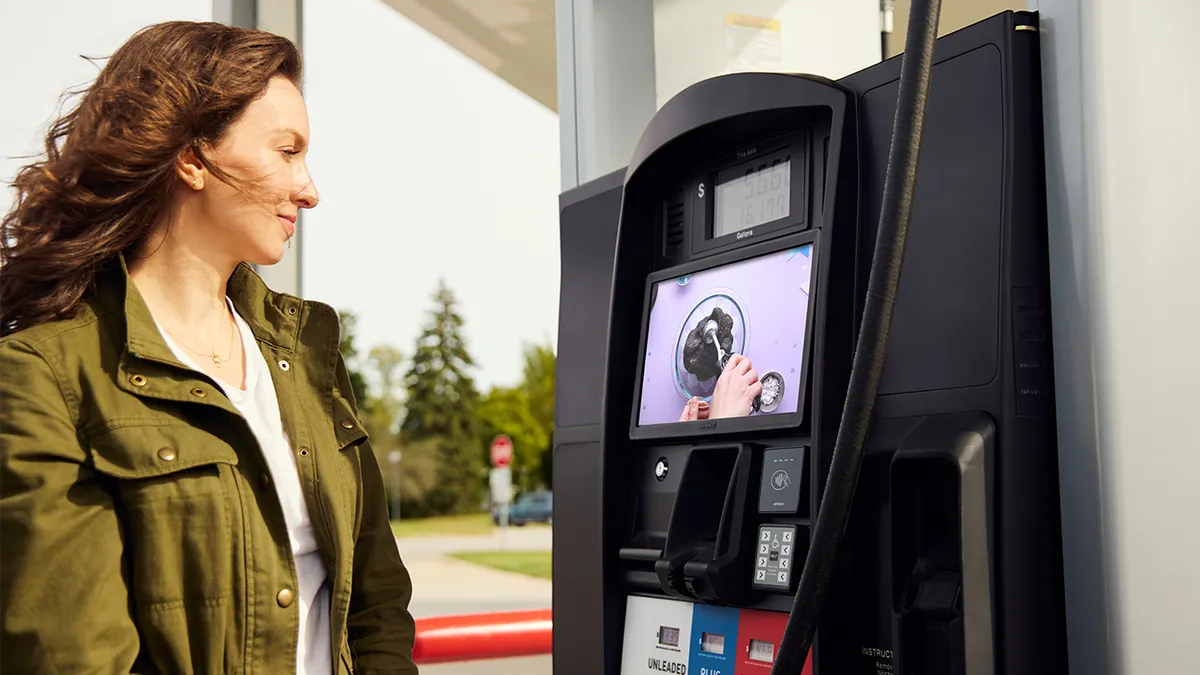
One powerful example of this strategy is "on-the-go" video, which connects CPG brands with consumers when they are physically close to making a purchase. GSTV, for instance, reaches consumers at 29,000 fuel and convenience retailers nationwide, precisely when they are navigating their consumer journey. A study by Affinity Solutions found that consumers spend three to five times more in the three hours following a fuel-up compared to non-fuelers on the same day. This presents a compelling reason for CPG brands to target consumers using on-the-go video.
On-the-Go Video: Tailored for Today's Viewers
While "bite-sized" video content isn't new, its popularity has surged alongside social media usage. However, many video platforms struggle to capture viewers' full attention; 75% of people multitask while viewing, and 65% engage with other media simultaneously. In contrast, consumers fueling their vehicles are often in a more focused state, making it harder to consume other media. This creates a highly engaged audience for advertisers, leading to greater brand recall, increased sales, higher foot traffic, and enhanced digital engagement.
"At GSTV, we often say that 'fuel day is errand day,' meaning that a consumer doesn't just leave their house, fill up their tank, and return home," Lazarus notes. "They're often on their way to spend money elsewhere."
A Q3 2025 GSTV audience pulse survey revealed that 50% of all audiences mentally review their shopping lists while fueling up. For Gen Z viewers, this engagement is even higher: 70% think about their next meal, and 68% get ideas for future purchases during this time. For younger audiences, these shorter, less intrusive videos feel natural and accessible, delivering quality content in formats they are accustomed to from social media and other digital platforms.
Lazarus adds, "A survey of GSTV viewers found that Gen Z indicates higher receptivity to ads at gas stations than other video channels like linear, streaming, and social media."
Aligning Brands with Evolving Media Habits
Daily time spent watching traditional TV continues to decline. As more households cut the cord and migrate to streaming platforms, audiences become increasingly fragmented, making it challenging for brands to achieve scale through a single channel.
A 2024 campaign by a large national restaurant chain aimed at driving customer visits demonstrated the power of a multi-platform video approach, combining CTV, online video, and GSTV's on-the-go video. On its own, GSTV drove a 12% lift in visits. When GSTV was combined with CTV, the lift increased to 22%, and a remarkable 27% lift was observed when combined with CTV and online video, according to a joint study by MAGNA Media Trials and GSTV.
"On-the-go video is a powerful complement to any media plan, extending reach and frequency beyond the living room to connect with new audiences and reinforce messages seen on linear or CTV," Lazarus explains. "These ads are part of a maximum-impact, full-funnel video strategy that drives awareness at home and conversion closer to the point of purchase."
Maximize Your Ad Spend in the New Video Landscape
While short-form content won't entirely replace traditional TV, it is undeniably more aligned with how people consume video today. Brands that embrace this expanded definition of "TV" are better positioned to reach more customers, more frequently, and with greater impact.
On-the-go video offers a unique advantage for CPG brands looking to adapt their strategies to evolving consumer behaviors. Its brief format engages consumers within their daily routines and directly on their path to purchase. Whether fueling up, grabbing a snack, or running errands, these moments are closely tied to purchase intent, significantly enhancing the potential impact of advertisements and seamlessly connecting brand storytelling with real-world consumer behavior.
"CPG marketers who incorporate it as part of a media plan can maximize attention and unique reach to drive real-world relevance seen in measurable bottom-line impact," Lazarus concludes.