Unilever, the consumer packaged goods (CPG) behemoth, is significantly ramping up its investment in U.S. sports marketing, nearly doubling its spend between 2024 and this year, with further expansion planned for 2026. This aggressive move signals a fundamental shift in the company’s marketing philosophy, moving beyond traditional "one-to-many" broadcast advertising towards a dynamic "many-to-many" approach that leverages digital and social-first strategies to engage diverse fan communities.
In an increasingly fragmented media landscape, sports have long served as a reliable, albeit costly, anchor for marketers, representing one of the few remaining pillars of monoculture. Events like the Super Bowl consistently draw record ratings and broad audiences on linear TV, even amidst accelerating cord-cutting trends. However, sports content consumption is evolving rapidly, prompting companies like Unilever to adapt their strategies to align with growing digital and social-first habits.
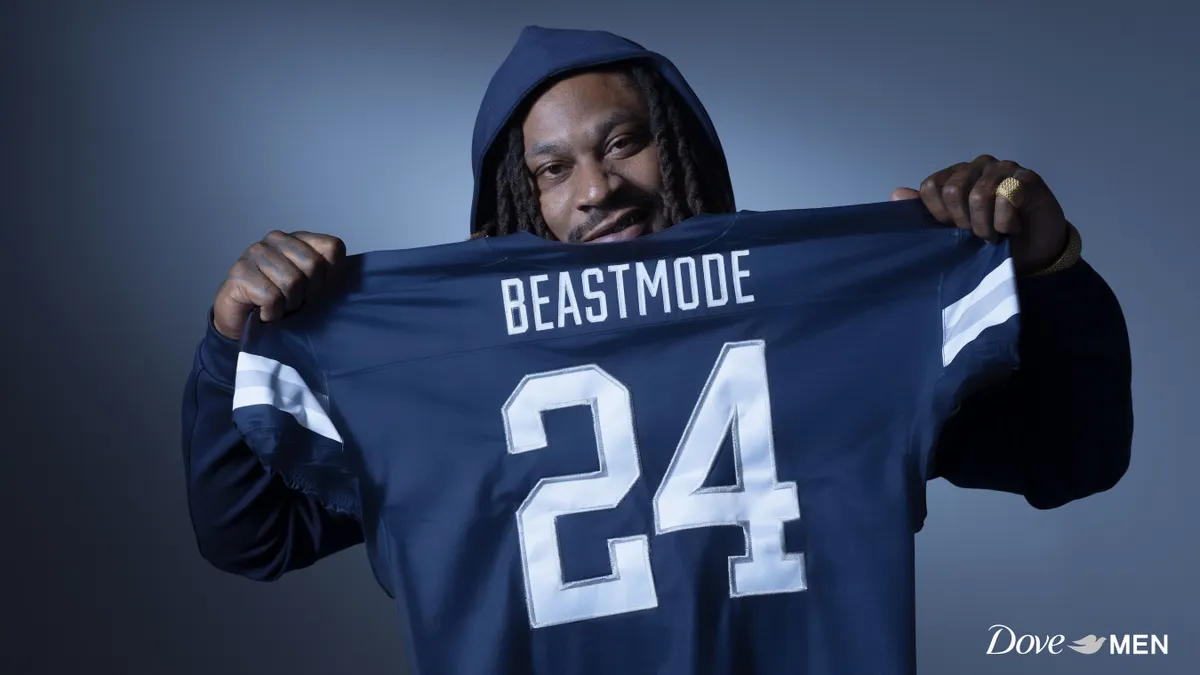
A prime example of this new direction is Unilever’s sponsorship of FIFA World Cup 26. Its Dove Men+Care personal care brand recently launched a humorous campaign featuring former NFL player Marshawn Lynch and U.S. soccer star Trinity Rodman. The campaign, running predominantly on Meta and TikTok, cleverly bridges two different interpretations of football while promoting a sweepstakes for highly sought-after tournament tickets. Ryu Yokoi, Chief Media and Marketing Capabilities Officer for Unilever Personal Care and North America, described the World Cup as "the biggest spectator event in all of history."
Unilever views major events like the World Cup as emblematic of a broader transition from broadcast marketing—historically a cornerstone for CPGs—to a "many-to-many" model. This approach aims to reach fans across all levels and occasions, aligning with Unilever’s overarching mandate to build "desire at scale" for its brands. This is particularly crucial as the company navigates challenges such as price-sensitive consumers and emerging CPG disruptors, all while its parent company undergoes a significant restructuring. CEO Fernando Fernandez announced in March that Unilever would allocate half of its total ad spend to social media and increase its work with influencers twentyfold, tactics already evident in its diversified sports marketing efforts. Yokoi emphasized sports as an "ever-more important play," noting, "There are few things that carry this kind of focused attention, where so many are watching, and yet also the pockets are there in terms of cohorts, communities within it that are enjoying and engaging with [sports] from different angles."
Social-First Sports Marketing
While Unilever has invested in sports sponsorships for years, it is now intensifying its presence through both large-scale and nuanced activations designed to connect with various consumer groups and capitalize on evolving digital capabilities.
Hellmann’s, for instance, made its Super Bowl debut in 2021, marking what Yokoi called a "step-change moment." Dove has also appeared at the last two Super Bowls, promoting messages around body confidence and encouraging young girls to stay involved in sports. These tentpole advertising opportunities, where 30 seconds of Super Bowl airtime can exceed $7 million, are increasingly supported by a steady stream of social and digitally oriented activations.
Hellmann’s has skillfully leveraged viral moments, such as Tennessee Titans quarterback Will Levis famously putting mayonnaise in his coffee. The brand quickly forged a long-term partnership with Levis, leading to campaigns ranging from a mock press conference addressing his unusual beverage routine to a "parfum de mayonnaise" gag fragrance and an accompanying faux-luxury campaign.
The social-first mandate also extends to user-generated content (UGC). For its sponsorship of the 2025 U.S. Open, Dove launched a call for an "underarm ambassador" to create TikTok content around the tennis tournament, promoting antiperspirant products and highlighting a typically unglamorous body part. This U.S. Open activation echoes Dove’s broader strategy of bringing fresh hygiene solutions to events where sweating and body odor are common, such as comic-book conventions and music festivals.
According to Yokoi, Unilever doesn't have rigid criteria for capitalizing on trending social moments. Instead, it aims to integrate these opportunities within its "brandverse"—the narrative framework that amplifies specific product values and characteristics. The effectiveness of these social plays is further enhanced when they can be extended into other channels, particularly experiential marketing. Yokoi noted, "One of the things we’ve been experimenting with more and more that we love is this idea of mixing social and IRL moments. We find that that can be a real accelerator for this many-to-many idea."
Bridging Brand Building and Performance
The increasing gravitation of sports content to streaming platforms is also attracting greater investment from Unilever. The company is keen to tie marketing efforts more closely to conversions, a strategy Yokoi terms "culture to cart." Unilever was an early partner with Amazon, utilizing audience-based creative tools that enable brands like Dove to tailor ads more effectively to households based on geographic, demographic, and behavioral data.
Amazon’s unique ability to combine its retail media strength with an expanding portfolio of premium sports content, including NFL "Thursday Night Football" and regular-season NBA games, has given it a first-mover advantage and fueled substantial growth in its advertising business. This integrated approach is being replicated across the retail sector, as seen in Walmart’s acquisition of Vizio, which will expand the big-box store’s advertising screen presence. Yokoi stated, "Streaming has opened up a full digital playbook for us in what used to be a linear transmission."
Despite the strong emphasis on performance marketing tactics, Unilever remains committed to purpose-driven messaging at the top of the marketing funnel, even during high-profile events like the Super Bowl. This year, Dove ran a powerful Super Bowl spot highlighting how many young girls abandon sports due to a lack of body confidence—an issue the personal care brand has championed for decades. The emotionally resonant commercial garnered accolades for its impact and also reached incremental audiences, such as fathers coaching youth leagues.
Yokoi concluded by emphasizing the dual focus: "We have to look at both the short-term and the long-term impacts of this stuff in terms of the equity that we’re building and also, in the short term, the real drive to sale that’s happening in those windows. We generate a ton of merchandising around these events and it’s really important that we sell through for our customers, our customers being the retailers."