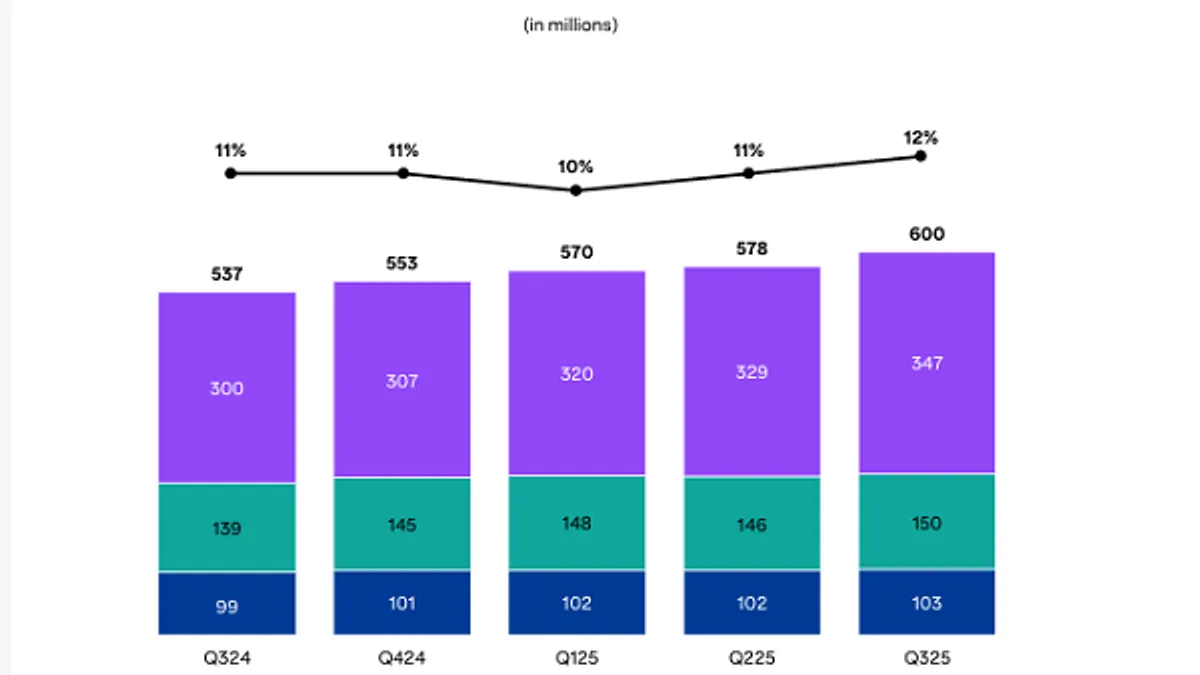
Pinterest has achieved a significant milestone, announcing it now boasts 600 million monthly active users (MAU) in its Q3 2025 earnings report. The visual discovery platform also reported a 17% year-over-year increase in revenue, reinforcing its steady growth trajectory. This latest report indicates a robust addition of 22 million MAU since the previous quarter, signaling a strong rebound in user acquisition.
Global User Growth and Regional Dynamics
This user expansion was broad-based, with Pinterest reporting growth across all regions. This marks a notable recovery, particularly in Europe, where the platform had experienced a loss of 2 million active users in the prior reporting period. The "Rest of World" category, including key markets like Brazil and Mexico, demonstrated the most significant traction, contributing substantially to the overall user base. While these emerging markets offer new opportunities, user engagement in the U.S. and Europe remains paramount for Pinterest's financial performance.
Despite the impressive global user growth, the average revenue per user (ARPU) highlights a disparity. Pinterest continues to generate substantially higher revenue from its U.S. audience, with European ARPU also significantly outperforming the "Rest of World" category. The platform acknowledged that its overall ARPU is not rising as rapidly as user numbers, indicating a need to enhance monetization strategies and expand ad product offerings in new regions to fully capitalize on its growing user base.
Q3 Revenue and Strategic AI Focus
For Q3, Pinterest reported just over $1 billion in revenue, primarily driven by its advertising business. While a steady performance, the company aims for a substantial boost in end-of-year sales to accelerate revenue growth. This ambition is supported by Pinterest's evolution into a leading discovery platform, continuously enhancing its search tools with recent AI integrations to deliver more relevant product matches for users.
A key development in this area is the recently launched AI assistant tool, which combines visual matching with conversational queries to help users discover relevant items. Pinterest's strategic focus on shopping tools ensures its AI applications are closely aligned with its core use case. Unlike some AI tools that generate arbitrary content, Pinterest's AI enhancements are directly tied to practical usage, improving discovery and potentially paving the way for more direct shopping integrations. Such advancements could significantly broaden its appeal to consumers seeking seamless shopping experiences.
The Path to Direct E-commerce Integration
While reaching 600 million users is a commendable achievement, the platform's ultimate success hinges on seamlessly integrating direct purchase activity. Pinterest has made strides in encouraging brands to upload product catalogs for in-app listings, but the next crucial step is to establish a more direct pathway for users to complete purchases within the platform. Although in-stream shopping presents integration challenges and lacks strong precedents in non-shopping apps, Pinterest's distinct positioning—increasingly aligned with shopping and diverging from traditional social media—suggests this direction could be a natural evolution.
This strategic move would transform Pinterest from a sophisticated online product catalog into a comprehensive e-commerce platform, powered by AI tools that personalize product discovery. Overall, Pinterest's Q3 results present a mixed picture: robust user growth is back on track, but revenue expansion lags slightly. The company anticipates heightened interest in Q4, yet its complete conversion into the definitive "artisan shopping tool" will ultimately depend on deeper, more integrated shopping functionalities.