As social media influencers increasingly shape public discourse and wield significant influence, a global debate is emerging regarding their accountability and qualifications when discussing sensitive topics. In response to growing concerns over misinformation, both China and South Korea are pioneering new regulatory approaches to restrict online creators from commenting on subjects for which they lack professional expertise.
China's Stricter Stance on Expertise
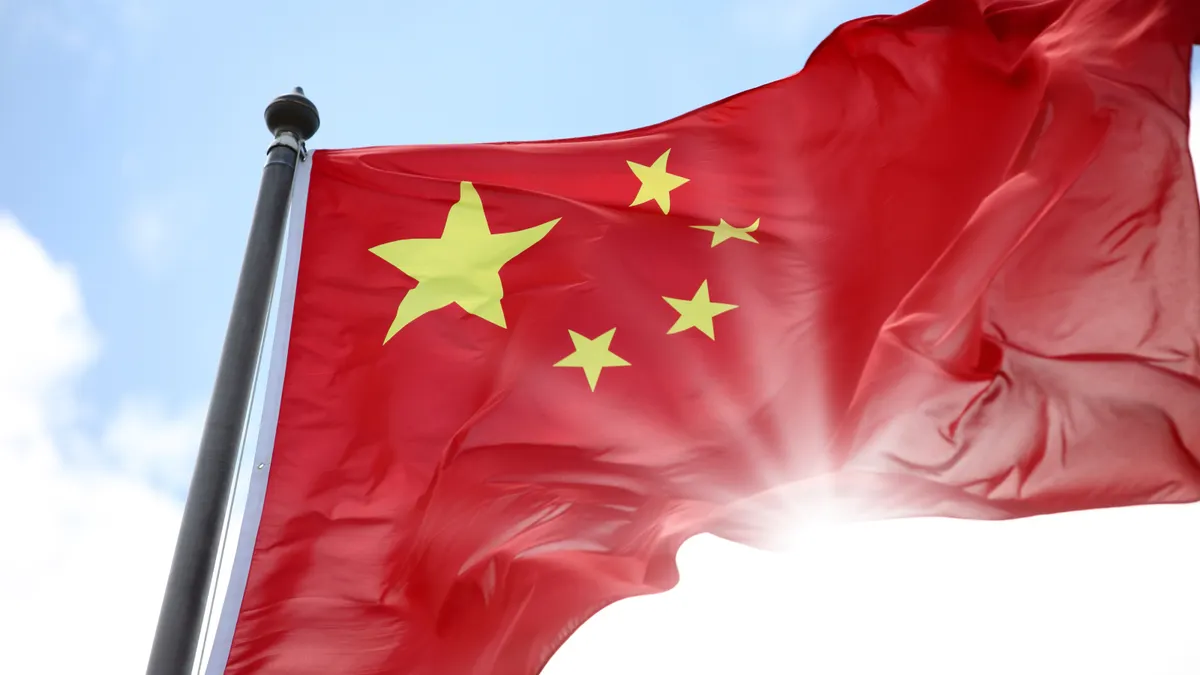
China's Cyberspace Administration recently intensified its enforcement of a 2022 regulation, "Conduct for Online Broadcasters," which mandates that content creators discussing sensitive topics must provide proof of professional qualifications. This includes presenting a license, degree, or certificate to substantiate their claims.
For live-streaming content that requires a high level of expertise (such as medical and health, finance, law, and education), the streamer should obtain the corresponding professional qualifications and report these qualifications to the live-streaming platform. The live-streaming platform should then review and register the streamer's qualifications.
The objective is to prevent influential but unqualified individuals from disseminating false information. Violations of this law can result in substantial fines, reportedly up to $14,000 USD.
South Korea Considers Entry Restrictions
Meanwhile, South Korea is exploring new regulations that could bar foreigners who post hateful or derogatory content about the country from entering the nation. This proposal follows several high-profile incidents involving foreign influencers sharing disparaging material.
The Korea Times highlighted recent cases, including American streamer Johnny Somali, indicted for disruptive behavior, and Japan-based Korean YouTuber Debo-chan, under investigation for falsely claiming "dozens of mutilated bodies" were discovered in Korea.
A Contrasting Approach in the West
These proactive measures by China and South Korea stand in stark contrast to trends observed in Western nations, particularly the United States. While Asian countries seek to prevent social instability by enforcing stricter content rules, the U.S. has seen a move towards loosening content controls and even elevating the credibility of online influencers, despite experiencing significant political and social instability linked to misinformation.
For instance, Meta earlier this year discontinued its third-party fact-checking program and announced a relaxation of content rules across its platforms. This shift, Meta stated, followed years of political pressure to censor less content under the previous U.S. administration. The Trump administration, advocating for fewer content controls, saw major platforms adjust their policies accordingly. Notably, several influential podcasters who amplified Trump's messaging were subsequently appointed to senior government roles.
This Western approach, which can boost the credibility of creators spreading potentially false information, raises concerns about increasing public susceptibility to conspiracy theories and propaganda, often presented as alternatives to "mainstream" media. By platforming ill-informed non-experts, there's a risk of legitimizing harmful theories, which, as their audience grows, can significantly sway public opinion and electoral outcomes.
The Free Speech Dilemma and Social Instability
The debate over regulating online content creators often collides with principles of free speech. While proponents argue that discussions are merely "just talking" or "just asking questions," this perspective often overlooks the lack of accountability for spreading misinformation and misleading the public. A free press is undeniably fundamental to democratic society, yet a clear level of harm can arise when creators, lacking expertise, offer opinions on complex topics they do not fully comprehend.
In the current social media landscape, where information is frequently distilled into meme-like formats, this knowledge gap is exacerbated. Podcasters and influencers often capitalize on the algorithmic amplification of outrage, tackling controversial issues to provoke emotional responses, expand their reach, and boost engagement. While this approach drives modern media consumption, its potential for harm remains indeterminate, possibly fueling social division and anxiety.
The divergence in media approaches is striking: Western platforms appear to encourage a more permissive environment for content creators, while their Asian counterparts actively seek to curb potentially harmful influence. While free speech remains a critical pillar of democratic societies, the contrasting strategies highlight a fundamental tension between unrestricted expression and the imperative to mitigate misinformation and social instability in the digital age.