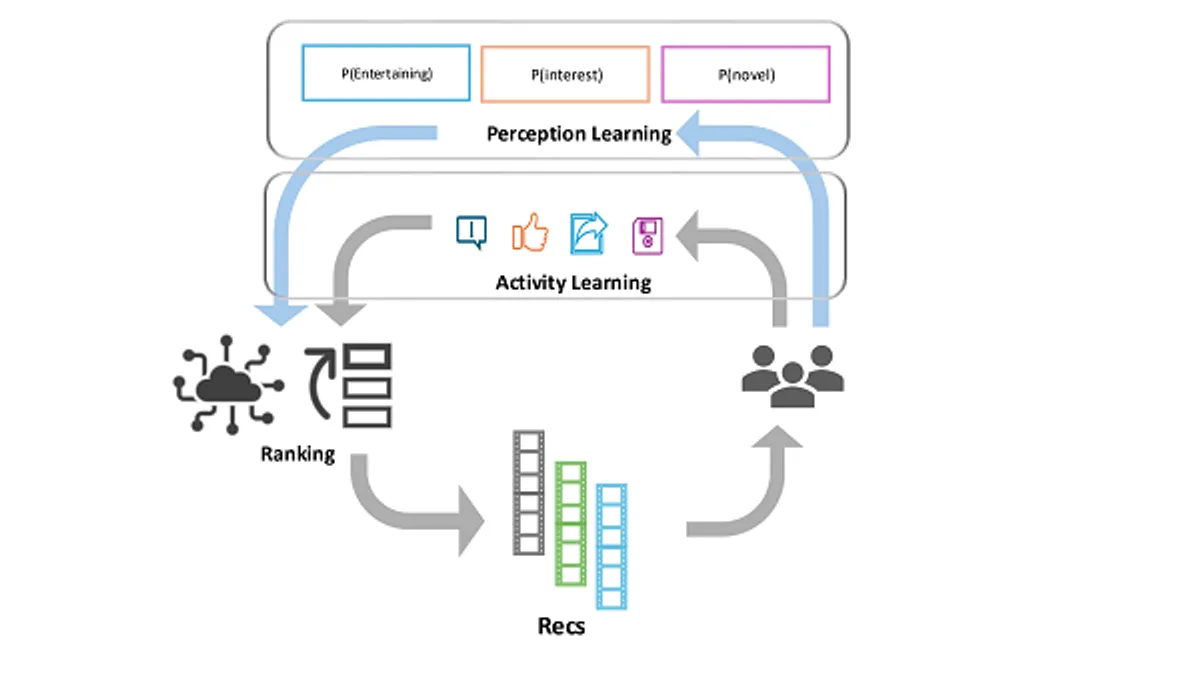
Meta is significantly enhancing its Reels recommendation system by directly incorporating user feedback. The company recently published an overview detailing how it uses user response surveys to better understand what drives interest and engagement in short-form videos. You've likely encountered these prompts within your Reels feed, appearing between videos to ask for your immediate reaction to the content you just watched. Meta states that this large-scale deployment of direct feedback has provided crucial insights, allowing them to refine and improve their Reels recommendations.
Leveraging Direct User Feedback
This approach marks a shift from relying solely on implicit engagement signals like likes, shares, and watch-time. Instead, Meta is actively seeking explicit feedback to gain a deeper understanding of user preferences. As the company explains:
By weighting responses to correct for sampling and nonresponse bias, we built a comprehensive dataset that accurately reflects real user preferences – moving beyond implicit engagement signals to leverage direct, real-time user feedback.
The strategy appears to be yielding positive results.
Significant Improvements in Relevance
Before implementing these user surveys, Meta's recommendation systems achieved only a 48.3% alignment with actual user interests. However, after integrating the insights gathered from this feedback, that alignment has reportedly surged to over 70%. This substantial improvement highlights the effectiveness of direct user input in refining algorithmic recommendations.
Meta emphasizes its commitment to continuous enhancement:
By integrating survey-based measurement with machine learning, we are creating a more engaging and personalized experience – delivering content on Facebook Reels that feels truly tailored to each user and encourages repeat visits. While survey-driven modeling has already improved our recommendations, there remain important opportunities for improvement, such as better serving users with sparse engagement histories, reducing bias in survey sampling and delivery, further personalizing recommendations for diverse user cohorts and improving the diversity of recommendations.
Meta vs. TikTok: The Recommendation Race
While Meta's progress is notable, and similar survey-based methods have been successfully employed by platforms like Pinterest, the social media giant still faces stiff competition. Many observers believe Meta's Reels recommendations continue to trail behind TikTok's highly addictive "For You" feed algorithm, which remains the industry benchmark for compulsive user engagement.
This raises the question: What gives TikTok's algorithm its edge over Meta's?
TikTok's Deep Understanding and Controversies
A primary factor is TikTok's advanced system for "entity recognition" within video clips. This technology allows TikTok to extract far more granular data about the content, which it then uses to match user preferences with remarkable precision. While TikTok remains tight-lipped about its algorithm's inner workings, it's known that its system can identify highly specific visual elements.
In 2019, The Intercept uncovered a set of internal guidelines for TikTok moderators. These guidelines reportedly included explicit instructions to suppress content from users deemed "too ugly, poor, or disabled," as well as videos featuring "rural poverty, slums, beer bellies, and crooked smiles." The document even suggested scanning for "cracked walls" and "disreputable decorations" in users' homes.
These directives were allegedly designed to cultivate an aspirational image for the platform, thereby fueling growth. TikTok acknowledged the existence of such parameters at one point but clarified that they were intended for Douyin, its Chinese counterpart, and were never implemented on the global TikTok platform. However, the very existence of such detailed guidelines strongly implies that TikTok possesses the capability to systematically detect these specific visual elements through sophisticated computer vision technology, as manual moderation at such a vast scale would be impractical.
The Ethical Implications of Deep Personalization
This advanced capability is where TikTok truly excels: understanding a vast amount about the visual content and factoring it into recommendations. For instance, if a user lingers on a video featuring a blonde-haired man with blue eyes, TikTok's algorithm can infer this preference and subsequently serve more content from similar-looking creators. This extends to a myriad of physical traits and environmental elements, allowing TikTok to align with highly specific, even subconscious, user preferences.
While TikTok also utilizes conventional engagement metrics like likes and watch time, its deeper analytical power enables it to tap into users' more "primal leanings," fostering compulsive engagement. Should the full extent of this process ever be made public, TikTok would likely face intense scrutiny due to its potential use of psychological biases to compel users, possibly based on problematic or even harmful traits.
In contrast, Meta's approach, while improving, currently lacks this same depth of understanding. Although Meta could theoretically leverage extensive psychographic data from its older user base and their accumulated personal information on Facebook, it primarily relies on more conventional algorithmic signals and, now, direct user surveys, to enhance the Reels feed.
So, if your Reels recommendations have felt more relevant recently, Meta's new feedback system is likely the reason. This development not only improves your viewing experience but also suggests that your own content might be reaching more engaged and targeted audiences.