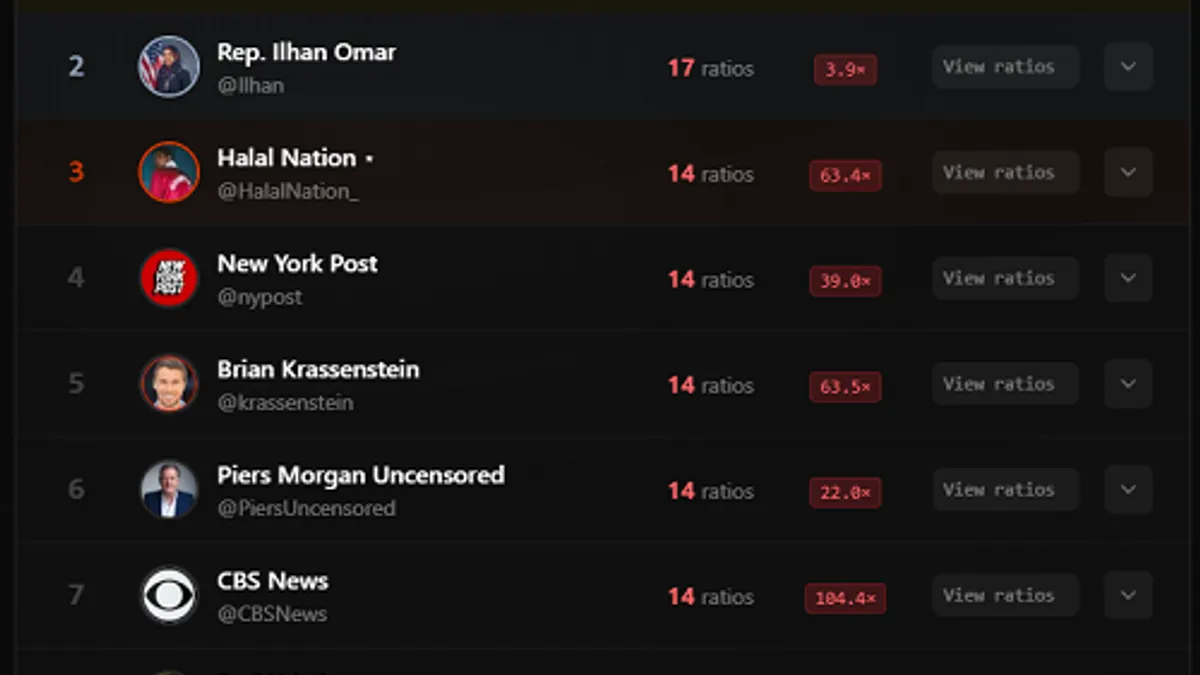
X (formerly Twitter) has unveiled a new tool called 'Ratio Finder,' developed by X engineer Chris Park, which allows users to identify the most 'ratioed' accounts on the platform. This feature, built on X's API, provides a unique, albeit potentially controversial, look into user engagement and online disagreement.
Understanding 'Being Ratioed' on X
The term 'ratioed' on X typically refers to a post that receives a disproportionately high number of replies or comments compared to likes or reposts, often indicating widespread disagreement or criticism from the community. In the context of the Ratio Finder, it specifically highlights posts where responses garner more likes than the original tweet, suggesting a strong negative sentiment or counter-argument.
The newly launched Ratio Finder mini-site offers a dynamic list of the most 'ratioed' users on X at any given moment. This ranking essentially identifies accounts whose content has generated the most significant negative reactions or widespread criticism. While some may view such a feature as a form of public shaming, highlighting users who frequently face backlash, it reflects X's ongoing experimental approach to platform development and user interaction.
Identifying Top 'Ratio-ers'
Beyond identifying the most 'ratioed' users, the Ratio Finder also features a list of top 'ratio-ers.' These are users whose replies to original posts consistently receive more likes than the initial content they are responding to, indicating their responses resonate strongly with the audience, often in a critical or corrective manner.
Critique of the Ratio Formula
However, the methodology behind the 'ratio' calculation has drawn some scrutiny. The original article highlights a perceived flaw in the system, particularly when applied to high-profile figures like X owner Elon Musk. Despite being the platform's most followed user, whose posts are widely seen, the tool's calculation can sometimes misrepresent the sentiment.
For instance, a response to an Elon Musk post might accumulate a large number of likes not necessarily because it criticizes the original, but simply due to Musk's immense presence and the visibility of any reply associated with his content. The article points out an example where a post with 78 responses and 1.3k likes was still flagged by the tool as 'ratioed,' implying disagreement, even though the high number of likes on the original post would typically suggest broad agreement.
This suggests that the Ratio Finder's current formula might not accurately capture the nuanced sentiment of user interactions, potentially misinterpreting engagement as negative 'ratioing' in certain contexts.
Accessing the Ratio Finder
Regardless of these analytical concerns, the X Ratio Finder is publicly accessible, allowing any user to explore the most 'ratioed' accounts or check the ratio metrics for any specific user on the platform.