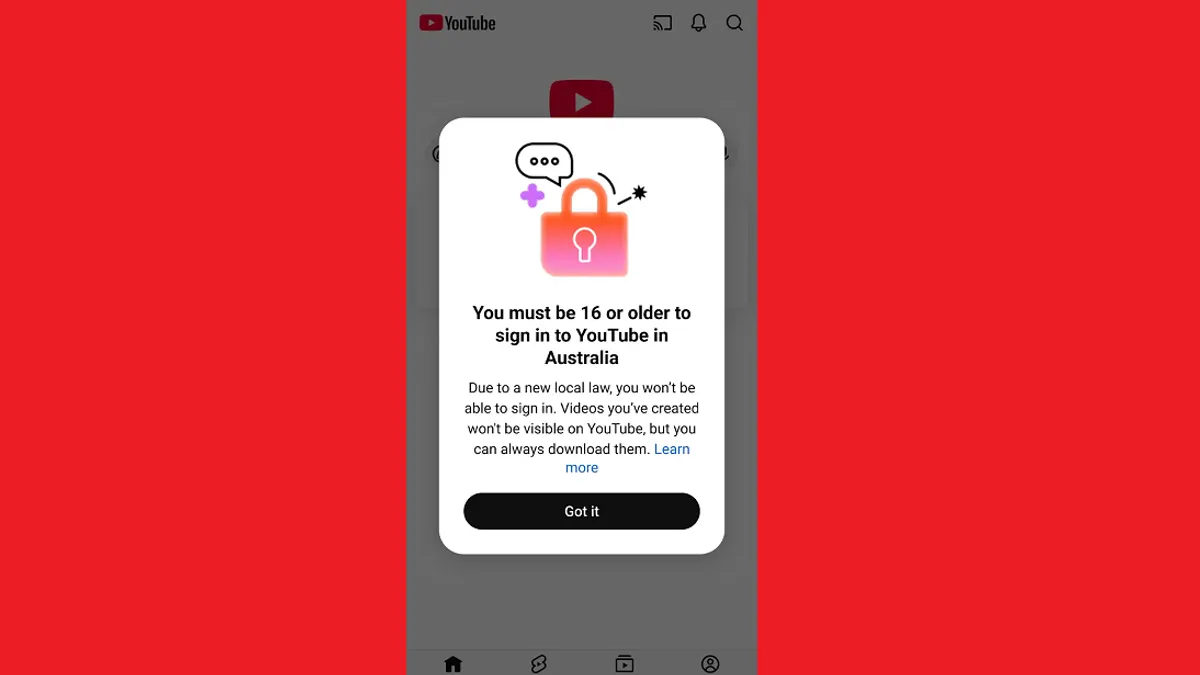
YouTube is moving to comply with Australia's new social media age restrictions, which will see users under 16 locked out of the platform starting December 10, 2025. Despite previously lobbying for an exemption and highlighting its educational value, the video giant is now alerting Australian users to the impending changes, which will significantly impact millions of young viewers.
Compliance Details for Australian Teens
From December 10, 2025, Australian teens under 16 attempting to log into YouTube will be met with a message preventing access until relevant age checks are completed. This measure follows the implementation of new social media age laws in Australia. While signed-out users can still view non-age-restricted content, they will lose the ability to like, subscribe, access their channels, or utilize monetization features within the app.
Background of the Ban
The Australian government announced its stricter social media age restrictions last year. Initially, YouTube was excluded from the new legislation, partly due to its recognized educational content. However, following advocacy from Australia's eSafety Commissioner, YouTube was re-added to the list of restricted platforms in July. This decision was met with strong opposition from YouTube, which emphasized its value to young users and sought to differentiate itself from other social-focused applications.
YouTube's Official Statement
YouTube has issued a clear statement regarding the new regulations, as detailed on its support page:
“Due to a new law in Australia, the minimum age required to sign in to YouTube in Australia is 16. This means that starting on 10 December 2025, users under 16 years old will be automatically signed out from YouTube. This includes any supervised pre-teen and teen accounts.”
Concerns and Criticisms from YouTube
YouTube has voiced significant concerns about the new laws, describing the legislative process as “a rushed legislative process” that failed to allow for adequate consultation on the complexities of online safety. The platform argues that the law “fundamentally misunderstands why teens come to YouTube,” emphasizing its role as a video streaming service for learning and entertainment—from "how to tie a tie" videos to famous speeches, newsmaking podcasts, live concerts, and epic sports highlights.
The company asserts its commitment to “protecting kids in the digital world, not from the digital world,” highlighting its existing investments in age-appropriate products like YouTube Kids, supervised teen experiences, default wellbeing settings, and robust parental controls. YouTube contends that by requiring kids to use the platform without an account, the new act effectively removes these built-in safety filters, potentially making children less safe.
Potential for Workarounds and Platform Migration
Despite the impending restrictions, many Australian teens reportedly remain confident they will find workarounds to maintain access to social apps. This sentiment is echoed by observations from parents of teenagers in Australia.
Furthermore, reports have suggested that Australian teens are already exploring alternative platforms. ByteDance-owned Lemon8 and the photo-sharing app Yope have been identified as potential destinations for users seeking to bypass the new age limits. The availability of decentralized social media options also indicates that teens are likely to find alternative avenues.
Enforcement Challenges and Future Outlook
A significant concern highlighted by critics is the absence of a clearly defined age-checking process within the new legislation, with platforms simply told to do their best to align with the new rules. This vagueness could complicate effective enforcement, and regulators are expected to closely monitor compliance and identify any potential loopholes. The effectiveness of these new restrictions, and how the government plans to penalize platforms that fail to adequately restrict access for younger users, remains to be seen.
YouTube has pledged to continue working with the Australian Government to advocate for “effective, evidence-based regulation that actually protects kids and teens, respects parental choice, and avoids unintended consequences.”