TikTok is significantly stepping up its efforts to protect shoppers from fraud and intellectual property (IP) violations within its in-stream shopping features. This strategic move aims to build greater consumer trust, especially in Western markets, as the platform seeks to replicate the massive success seen by its Chinese counterpart, Douyin.
ByteDance, TikTok's parent company, has already achieved remarkable results with in-stream shopping on Douyin, which is projected to generate around $500 billion in Gross Merchandise Value (GMV) in 2025. While TikTok users outside mainland China have shown less enthusiasm for in-app spending, TikTok Shop is steadily gaining traction, with a reported GMV of approximately $130 billion in 2025—a 100% year-over-year increase in total in-app sales.
Enhancing Trust for Western Consumers
Despite this growth, a critical factor for driving further adoption in Western markets is ensuring security and a positive shopping experience. This emphasis on consumer protection is believed to be a key contributor to Douyin's success, where stricter regulations provide more consumer safeguards and foster greater trust in the shopping process. TikTok is now making this a central focus.
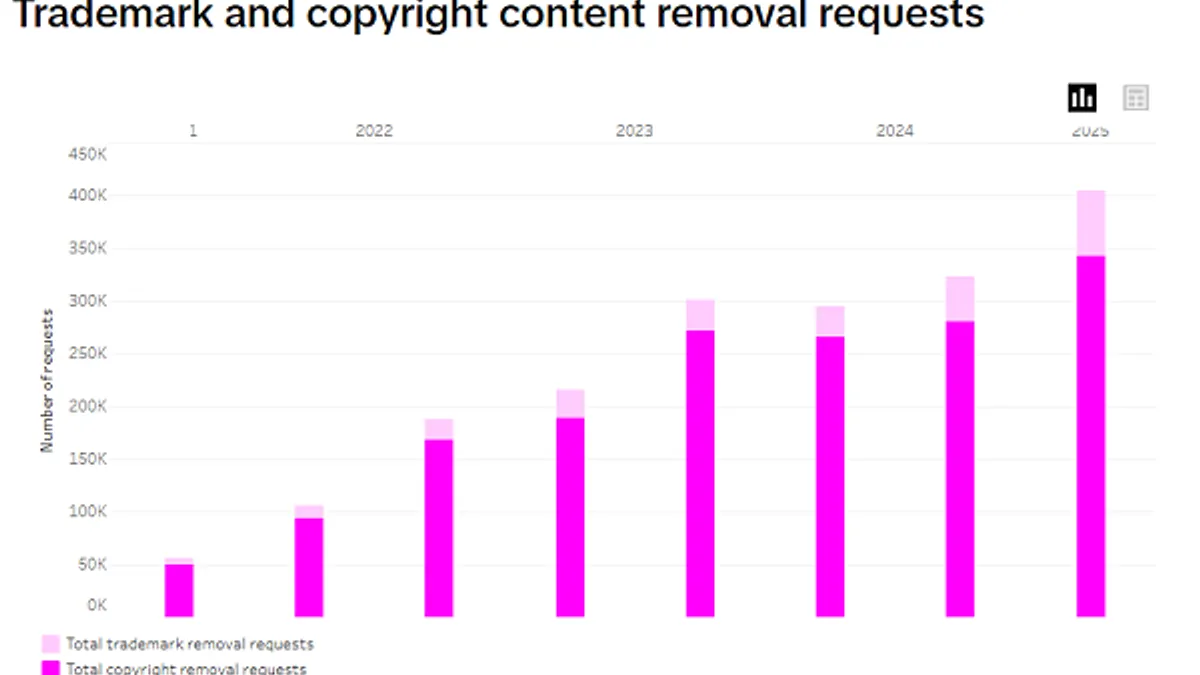
Just before Christmas, TikTok launched an expanded Intellectual Property Removal Request report. This report offers a comprehensive overview of the platform's cumulative actions to safeguard IP rights across the app, demonstrating a significant increase in enforcement over time.
The report highlights impressive figures:
Between January and June 2025, TikTok removed 30x more products and content through proactive measures (before the product or content appeared on the platform) than was removed after being reported by others or detected after posting. Our original determination of an IPR violation was deemed correct in more than 89% of cases.
This proactive approach illustrates TikTok's commitment to ensuring shoppers receive genuine products rather than counterfeit goods. Beyond IP, TikTok's detection measures have also led to the removal of over 143 million videos for violating Community Guidelines related to "trading, marketing, or providing access to counterfeit goods." Additionally, more than 530,000 videos and live-streams posted by TikTok Shop creators were removed due to IPR infringement.
TikTok further emphasized its dedication to originality:
We care deeply about championing originality. We continually strengthen how we protect intellectual property rights so that our community can have authentic experiences on TikTok. For example, this year we've reduced the steps needed to report an IP infringement on TikTok Shop. Users who have joined the Intellectual Property Protection Centre (IPPC) can now get to the relevant page in a single click (down from seven).
Overcoming Consumer Hesitation
The more effectively TikTok can enforce and police potential misuse, the better it can ensure a positive shopping experience, which could ideally lead to a behavioral shift towards in-stream shopping. This remains a significant challenge, as no platform has fully overcome Western consumers' inclination to keep their shopping activities confined to established e-commerce apps like Amazon or eBay, viewing social apps primarily for connection and entertainment.
Almost every social app has attempted to integrate e-commerce, but ingrained habits and a lack of trust in listed products have consistently limited success. This hesitation is understandable given the prevalence of online scams. According to the Global Anti-Scam Alliance, approximately 23% of adults globally have fallen victim to online scammers, with platforms like Facebook often identified as major vectors for scam activity.
It is therefore logical that consumers would be wary of entrusting social platforms with their money, explaining why Western consumers have been hesitant to embrace in-stream offers. Through these enhanced protection measures, TikTok aims to conquer this skepticism and establish itself as a trusted e-commerce destination.