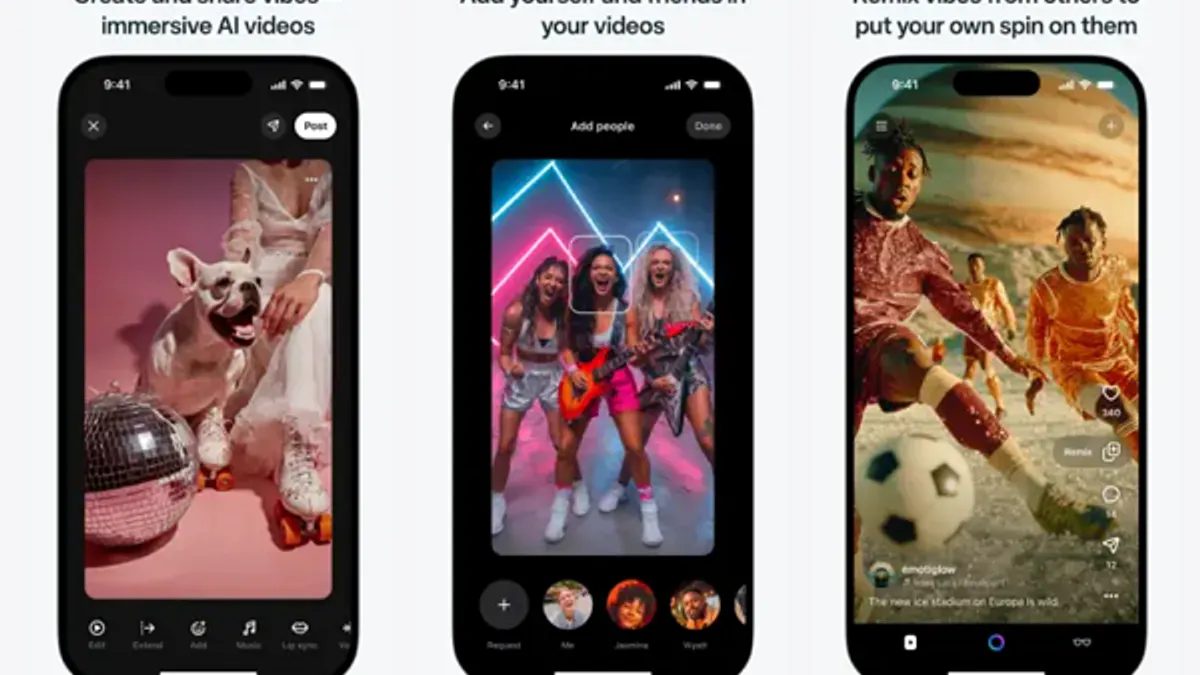
Meta is expanding its foray into generative AI with the pilot launch of "Vibes," a new standalone mobile application dedicated exclusively to AI-generated video content. Currently being tested in Brazil and Mexico, the app spins off from the successful AI-powered "Vibes" video feed previously integrated into the main Meta AI app. This move positions "Vibes" as a direct competitor to platforms like TikTok, but with a unique focus on purely AI-created clips.
The standalone "Vibes" app offers a full-screen video experience, isolating the AI video feed from other Meta AI functionalities, which primarily involve pairing Meta's AI glasses. Essentially, it functions much like TikTok, but every video clip presented is generated by artificial intelligence.
Explaining the rationale behind the new app, Meta stated (via Platformer):
"Following the strong early traction of vibes in Meta AI, we are testing a standalone app to build on that momentum. We’ve seen that users are increasingly leaning into the format to create, discover and share AI generated video with friends. This standalone app provides a dedicated home for that experience, offering people a more focused and immersive environment."
Meta has been actively enhancing "Vibes" since its initial launch within the Meta AI app last September, adding various editing and customization options to boost user engagement. The company highlighted this momentum in its most recent Q4 earnings report, noting that content generated via its Meta AI app tripled year-over-year. While this significant increase is partly attributed to the "Vibes" feed only becoming widely available in Q4, Meta clearly views the rapid adoption of AI-generated content as a strong indicator for further investment.
However, the emergence of a dedicated platform for purely AI-generated content raises questions about the future of social media and its core purpose of facilitating human connection. While generative AI tools represent a significant technological achievement, offering new avenues for creative exploration, concerns persist regarding their inherent derivativeness and potential lack of genuine originality or "human touch." Critics suggest that relying solely on AI for content creation could lead to an abundance of uninspired or "AI slop," as the tools primarily regurgitate existing data rather than fostering truly novel ideas. This approach could potentially dilute the quality of content users encounter, requiring more effort to sift through vast amounts of AI-generated material.
Despite these philosophical debates, Meta's substantial investment in AI development underscores its commitment to showcasing the capabilities of its generative AI technologies. The company's strategy appears to be focused on making creativity more systematic and accessible through AI, a perspective that contrasts with the view that true creativity stems from unique human experience and expression. The ongoing discussion revolves around whether AI can truly replicate the depth and nuance of human-driven artistry and connection.